Compare coffee styles across visits with a four-field note
Exploring coffee styles does not require ordering a large flight or memorizing every menu term. Use a modest note that captures composition, texture, serving and preference across separate visits. The method makes differences interpretable without turning a pleasant drink into a caffeine challenge or a scoring competition.
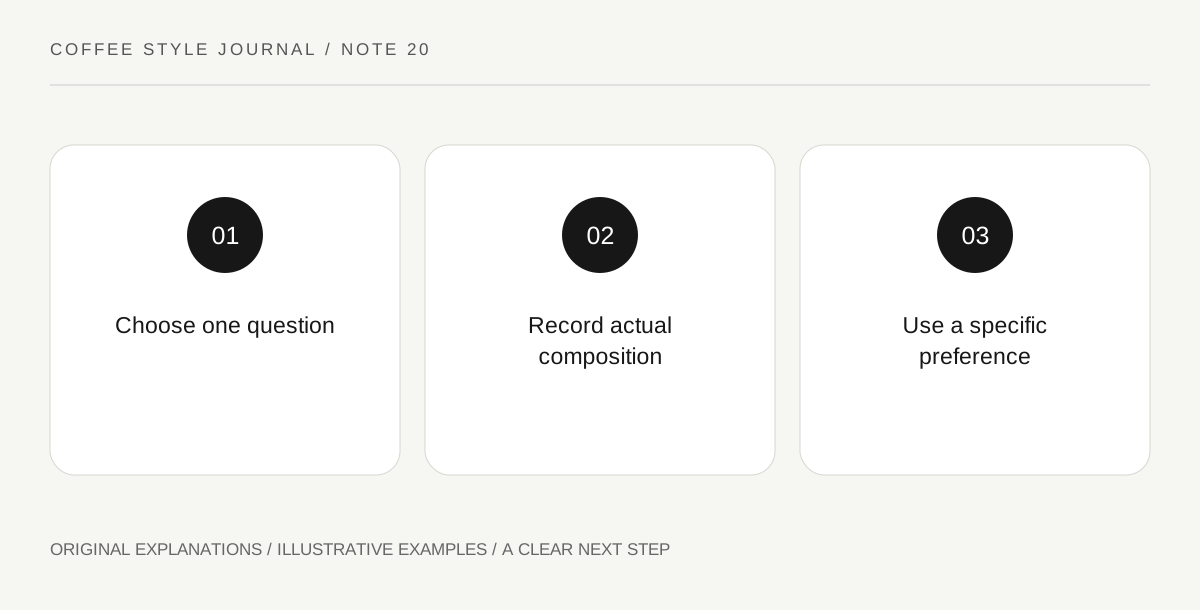
Original explanatory diagram. Read the full method and limitations below.
Choose a question before a drink
Ask what you want to learn: whether you prefer a cream topping, a mixed chocolate component or a plain carbonated mixer. Pick one manageable question and an appropriate serving. You can compare across days rather than consuming several coffees together. The purpose is learning your preferences, not maximizing the number of styles sampled. Choose another activity or a non-coffee option whenever that better fits your needs or the occasion.
Write the composition in four fields
Record the menu name, actual coffee base, additions and serving texture. A useful entry might distinguish a coffee-and-ice-cream dessert from a drink whose milk component is whipped or foamed. The published affogato and mocha examples demonstrate different compositions despite both involving coffee and a sweet component. Keep the venue's actual information visible. Do not fill gaps with a recipe from another producer merely because the names appear similar.
Describe preference without a universal score
Write one thing you enjoyed and one thing you would change. A simple observation such as too much topping for my taste is more actionable than assigning a numerical quality score. Separate flavor from texture and record the stage if the serving changed as ice melted or a dessert softened. Avoid ranking unfamiliar cultural preparations as better or worse because they differ from the cup you usually choose. Preference does not require a verdict on an entire tradition.
Use the note to make the next question smaller
Review the entries after several ordinary visits and look for a recurring preference. You may favor plain coffee bases with restrained additions or enjoy a spoonable dessert more than a blended drink. Ask about one component next time. Do not turn strong flavor, dark color or a small cup into a caffeine estimate. The note is a composition and enjoyment tool; numerical intake questions need actual reliable product information rather than a tasting inference.
Illustrative worked example
Illustrative scenario: over several weeks, a learner tries one mocha, one affogato and one sparkling coffee at separate visits. Their notes consistently favor a clear coffee flavor with fewer added layers, but they enjoy the affogato's texture as a dessert. The next cafe order asks about a plain base and optional topping. The pattern helps choose without claiming that one style is objectively superior.
Questions that come up
Do I need to finish every drink to learn from it?
No. A useful observation can be modest, and you can stop whenever appropriate. Exploration should not become pressure to consume more than you want.
Can I compare a dessert coffee with black coffee?
Yes, if the question concerns your preferred composition or occasion. Keep their roles explicit rather than pretending they are identical products competing on one universal scale.
References and scope
These sources support the factual background. Examples and exercises are original illustrative teaching material. References do not imply endorsement.
- Nespresso: Affogato — A manufacturer example combines coffee and vanilla ice cream; recipe variants are not standardized by this page.
- Nespresso UK: The Mocha — A manufacturer mocha example contains coffee, chocolate and milk; the page is not an allergen guarantee for other cafes.