Phin coffee: assemble the filter, control the drip and choose the finish
A phin is a small Vietnamese drip brewer, not an instruction that every cup must contain condensed milk. The filter, the coffee you load into it and the finished drink are separate choices. Learn a single-serving setup, watch the brew flow and decide whether to enjoy the result black, with milk or over ice.
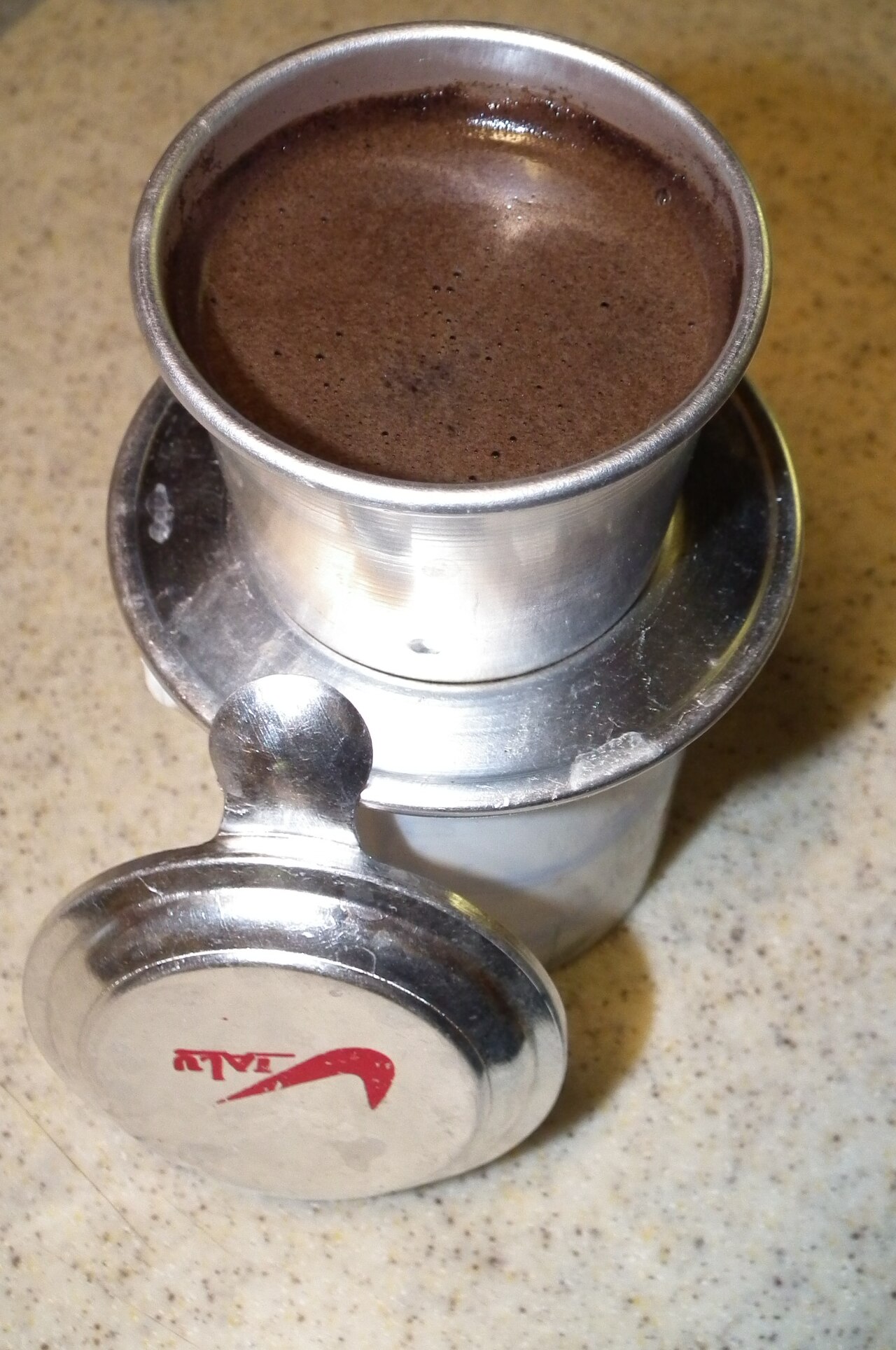
Identify the brewer and the drink separately
Nguyen Coffee Supply describes the phin as a Vietnamese drip brewing tool. Its guide offers the finished coffee hot or iced and with several possible additions, including sweetened condensed milk or none. Vietnam Tourism separately identifies cà phê sữa đá as iced coffee with condensed milk. Those distinctions make the menu easier to understand: a brewer name does not specify every ingredient in the glass.
The first preparation photograph shows coffee and water in a metal phin chamber above a receiving vessel. The second documents phin extraction into a glass with condensed milk in Da Lat. It illustrates one finished-drink choice alongside the brewing tool. Neither image establishes a required coffee-to-milk ratio. Read the recipe and bag for what will be brewed, then choose the serving additions deliberately.
Inspect and assemble the filter
Identify the plate, brewing chamber, internal press or filter insert, and lid on your model. Designs differ: do not force a gravity insert as though it were a screw-down part. Follow the brewer’s own assembly instructions and place it over a vessel that supports the plate securely. A narrow or unstable cup can be awkward even if it holds enough liquid.
Check that the holes and filter surfaces are clean and unobstructed. Use a vessel suitable for the hot coffee, with enough capacity for the expected output and any planned milk. Set the phin on a stable surface before filling it. Do not carry the assembled brewer around the kitchen after hot water has been added.
Start with a clearly measured small recipe
Nguyen’s single-serving guide gives an example of fourteen grams of coffee with four fluid ounces of water and a fine, sand-like grind. Use these explicit quantities rather than the page’s shorthand ratio, whose units are not a reliable substitute for the written example. Choose a phin sized for that amount of water; a larger model needs its own appropriate recipe.
For a beginner, weigh the coffee if possible. The volume of a spoonful depends on the coffee and how it is filled, so a repeatable mass is easier to compare. Use coffee intended for the preparation or seek the brewer maker’s grind guidance. Do not use the powder-fine Turkish coffee setting merely because both drinks are served in small portions.
References: 1
Level the coffee and begin the first pour
Add the measured grounds to the chamber, distribute them evenly and place the insert as its design requires. In Nguyen’s guide the gravity press rests above the levelled coffee; this is not an espresso tamping instruction. A compacted bed made by pushing as hard as possible gives you a different starting condition from the published method.
The guide begins with a small water pour and a short bloom before the remaining water. Arrange the kettle so you can pour with control and avoid flooding around the outside of the chamber. Keep track of total water, not just each individual addition. A second pour should not silently double a recipe that was meant to use a fixed total amount.
References: 1
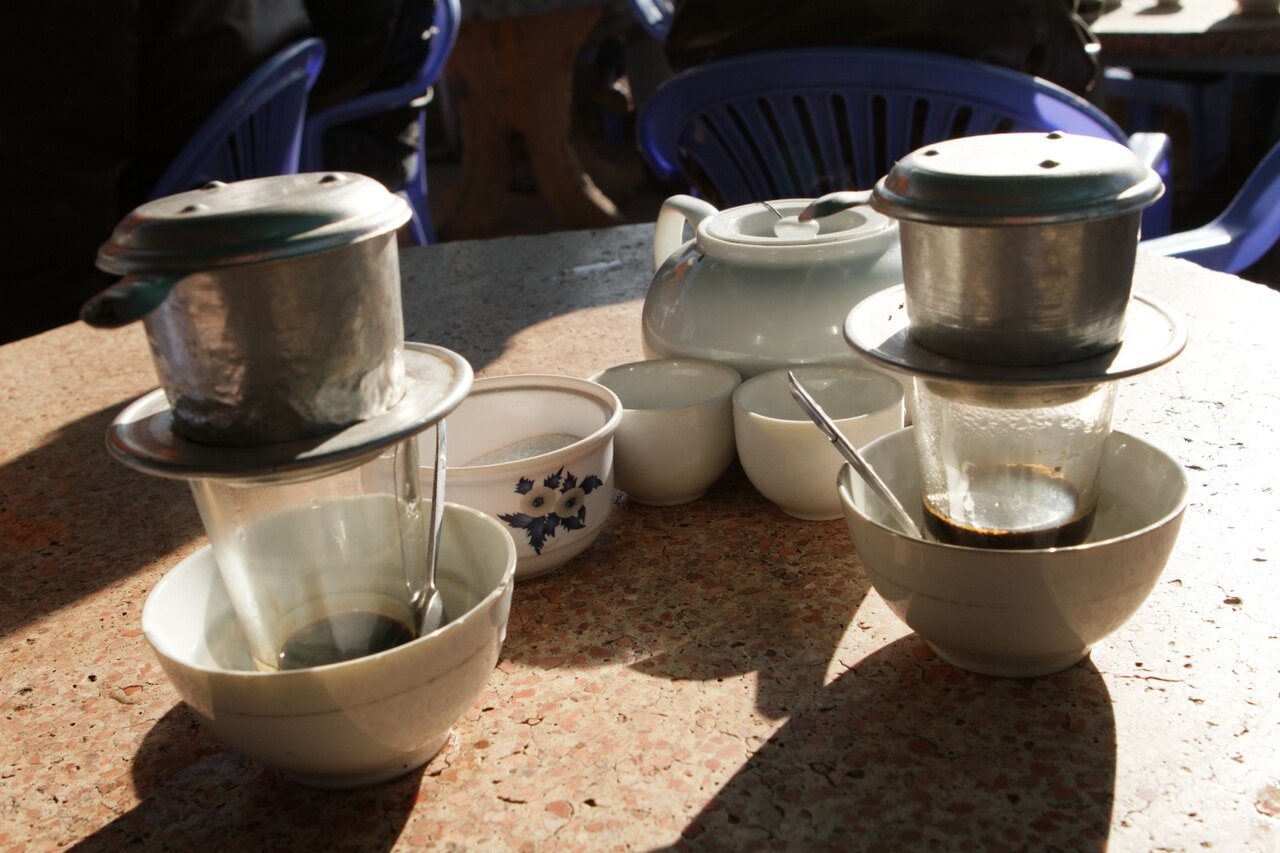
Watch flow without chasing a universal stopwatch
Nguyen provides approximate first-drip and finish times for its own guide, with the brew finishing around five minutes. Treat those as reference observations for that filter and recipe. They are not proof that all phin designs, coffees and batch sizes must finish at exactly the same second. Watch whether the bed is behaving plausibly as well as the clock.
If water runs straight through, review the grind, dose and assembly. If the brew scarcely drips, check for blocked holes or an incorrectly tightened insert before changing everything else. Avoid pressing down on a hot, full chamber to force it through. Make a specific adjustment on the next brew and keep the rest of the recipe comparable.
References: 1
Remove the brewer before finishing the drink
When the brew is complete, move the hot phin to a suitable heat-resistant rest using its intended grip or appropriate protection. Metal parts can be hot. Give the receiving cup your attention before adding ingredients: how much coffee is there, and what finishing style did you intend? A few last drips are not worth leaving the apparatus precariously balanced while you stir.
For a black serving, taste when comfortably cool. For condensed-milk coffee, incorporate a measured amount of sweetened condensed milk thoroughly rather than assuming the pale layer at the bottom will blend itself. For an iced serving, plan the ice and glass capacity before pouring. Ice and added milk change the final proportion, so use a recipe suited to that finish.
Do not confuse thickness with brewing success
A plain phin coffee need not have the same viscosity as a drink containing condensed milk or coconut cream. Nguyen’s FAQ explicitly distinguishes the brewer from finishing ingredients and discusses how additions change the drink. Compare plain coffee with plain coffee before concluding that a fluid brew has failed simply because an online glass looks thick.
Likewise, a dark appearance does not identify the beans, roast or added flavourings. Read the coffee packaging and describe what you used. If you enjoyed a café version, ask about its base and finish rather than assuming buying any metal phin will reproduce the complete drink. Brewing equipment gives you a method; the ingredients and serving choices complete the recipe.
References: 3
Clean for the next repeatable brew
Let the components cool enough to handle, empty the spent grounds appropriately and clean the phin according to its care directions. Pay attention to the small perforations and the insert rather than washing only the outside. Dry and store it so the next assembly begins with identifiable, usable parts. Do not assume every metal finish tolerates the same aggressive cleaner.
When ordering, ask whether the coffee is phin-brewed and whether it arrives black, sweetened with condensed milk or otherwise finished. If you want iced coffee, make that part of the order rather than waiting until a small hot serving arrives. This gives the maker a clear target while respecting that Vietnamese coffee includes more than one brewer or one drink.
Fix the drip before changing the milk
Illustrative brew: Arun follows a small phin recipe, but the water passes through much faster than expected. Before adding more condensed milk to make the drink appear thicker, Arun checks the grounds and filter assembly and adjusts the next brew. The milk portion is then chosen for taste. This keeps a flow problem separate from a preference for a sweet, creamy finish.
Questions
Must phin coffee contain condensed milk?
No. The cited brewer guide allows black coffee and several finishes. Condensed milk describes an addition, not an unavoidable property of the tool.
Should I tamp it like espresso?
Follow your model’s directions. The cited gravity-press guide places the insert on levelled coffee; it does not instruct an espresso-style hard tamp.
Why is my plain coffee thinner than a café photo?
The pictured drink may contain milk or another addition. Compare the actual recipes and flow before using appearance alone to diagnose brewing.
Sources and photography
- Nguyen Coffee Supply: Phin Filter brew guide
- Vietnam Tourism: Coffee Culture
- Nguyen Coffee Supply: How-to FAQ
Photographs are credited beside each image. Their recorded capture dates describe the images; check the current visitor or product information linked above when planning.