Make an affogato with a clear contrast between espresso and ice cream
An affogato is most interesting while cold ice cream, hot coffee and the first melted cream still taste distinct. Make it at the moment you want to eat it. This guide covers a small starting version, the pouring sequence, separate-table service and adjustments that preserve the dessert instead of turning it unintentionally into a large milky drink.

Recognize the dessert before choosing a recipe
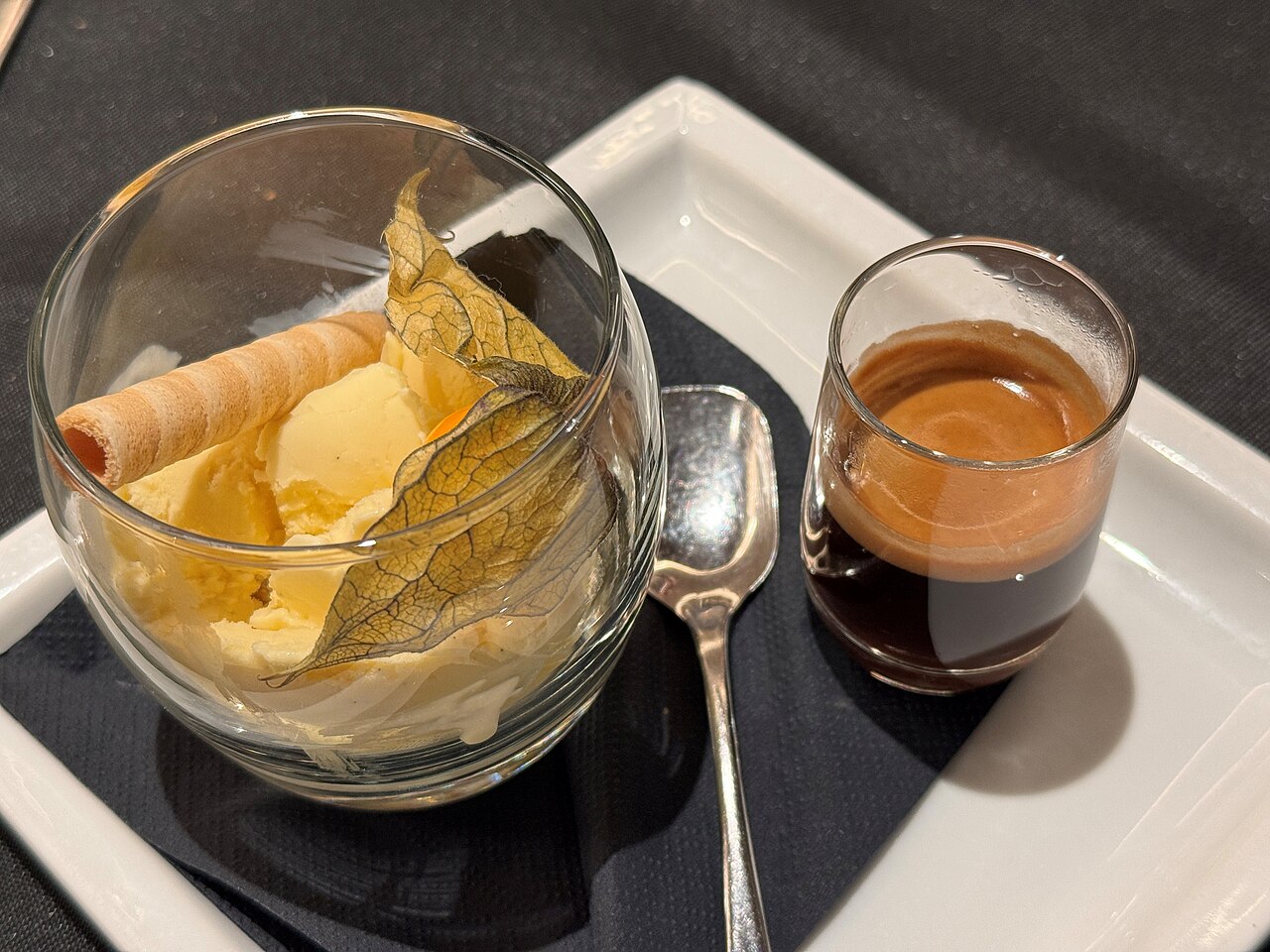
For the straightforward version here, the essential relationship is ice cream with a small serving of coffee poured over it. You should be able to identify both at the beginning: a spoonable cold portion and a pool of coffee touching it. The finished appearance changes quickly, so a photograph of an already combined affogato can look quite different from a tray holding the two components separately. Both stages are shown in the accompanying verified photographs.
Do not identify an affogato solely by a clear glass or a scoop-shaped topping. A blended coffee drink, an iced latte and a dessert covered with whipped cream have different constructions. Read the ingredients and service description. A cafe may offer additional flavourings or a larger dessert, but the useful first question is whether you are ordering espresso with ice cream, and whether the coffee arrives already poured.
Gather one small serving, with room for the pour
Nespresso’s published simple version uses one scoop of vanilla ice cream and either 25 millilitres of ristretto or 40 millilitres of espresso, in a 170-millilitre cappuccino cup. These are a producer’s concrete starting quantities, not a rule that every cafe must follow. They are useful because the coffee remains a small component rather than a full mug that immediately overwhelms the scoop.
Have ice cream, freshly prepared coffee, a spoon and a suitable serving vessel ready. Scoop size varies, so check that the portion and the planned coffee fit with enough space to use the spoon without spilling. If the portion looks cramped before coffee is added, choose a larger suitable vessel or a smaller scoop. Read the actual ice-cream and topping labels when serving someone with ingredient or allergy requirements.
References: 1
Prepare the place before taking ice cream out
Set the spoon and any small pouring cup beside the serving vessel first. Use a stable cup or bowl suitable for the intended temperature changes; do not pour hot coffee into an unfamiliar thin glass simply because a photograph uses glassware. Follow the vessel maker’s guidance. A saucer or small tray can provide a landing place for the pouring cup and keep a drip from becoming a slippery handle.
Keep the ice cream stored according to its instructions until the coffee equipment and place setting are ready. The practical sequence matters more than producing a perfectly round scoop. If you remove the tub, search for a spoon, wash a cup and then start brewing, the dessert begins changing before you have assembled it. Arrange those ordinary tasks first so the cold portion waits only for the final step.
Brew a short coffee you already know how to make
Use your espresso machine or capsule system according to its own instructions. Prepare the small coffee serving immediately before assembly rather than leaving it on the counter through several unrelated tasks. If you want to know how the coffee itself tastes, make that assessment separately on another occasion; there is little benefit in allowing this dessert to melt while trying to conduct a long coffee evaluation.
Without an espresso system, a small quantity of strong brewed coffee can make an enjoyable coffee-and-ice-cream dessert, but describe the substitution honestly. A large volume of ordinary filter coffee changes the amount of liquid and how much ice cream is submerged. Start by deciding whether you want to follow the cited espresso version or make your own variation, rather than treating every coffee vessel as an interchangeable shot.
Scoop, pour and begin eating
Place the scoop in the serving cup, bring the coffee alongside and pour it gently onto and around the ice cream. Keep the vessel on its stable surface during the pour and keep hands away from the hot liquid. You do not need a dramatic high pour: the useful action is controlled contact between the coffee and the cold portion, with enough room left for the spoon.
Begin with a small spoonful that includes ice cream and some coffee. Then try the softer edge, where melted cream is joining the liquid. You can stir lightly if you prefer a more combined result, or leave part of the scoop intact for longer contrast. Neither approach is a test of authenticity. The choice changes the experience, so make it because you want that texture rather than because a photograph appeared perfectly layered.
Understand the changing texture
Early in the serving, the coffee pool and firm ice cream can be taken separately. As the edges soften, the same spoonful contains a different balance. Later, the mixture becomes more liquid and less sharply divided. This change is the reason to assemble close to eating, not a defect that a garnish can necessarily correct.
If you prefer the early contrast, use a modest serving and begin promptly. If you enjoy the combined creamy coffee, allow it to mix naturally while you eat. Do not keep a nearly melted bowl waiting for a second person and expect it to resemble the freshly assembled one. Serve the components when that person is ready, or acknowledge that a different stage of the dessert is being offered.
Serve two people without making the second bowl wait
For a small group, prepare the place settings first and keep the ice cream cold while the coffee equipment becomes ready. Consider the order in which your machine can actually produce servings. If it makes one coffee at a time, complete one dessert and hand it over rather than pouring the first coffee into a melting bowl while preparing several more.
Separate service can also work: bring an appropriate small coffee vessel beside the ice cream, explain that it is hot, and let the person pour when ready if they can do so comfortably. The South Tyrol photograph shows this kind of before-pour arrangement. Its wafer and fruit are features of that particular presentation, not ingredients required to make the simple version described here.
Choose additions without losing the main comparison
Vanilla provides a clear starting point for learning the coffee-and-ice-cream relationship. Once you know that version, an alternative flavour or a small topping can be a deliberate variation. Change one prominent element at a time if you want to understand the result. Chocolate syrup, a flavoured ice cream and a sweet biscuit all together make it harder to identify which change supplied the sweetness or aroma you notice.
Lavazza’s published affogato example uses two scoops, a double espresso and chocolate syrup, demonstrating a larger chocolate-accented variation. It is different from the simpler producer example above. Choose the version you want rather than combining every quantity from both. Alcohol, whipped cream and elaborate decorations are optional menu variations; do not assume they are present or absent when the ingredients matter to your order.
References: 2
Fix the next serving by identifying the actual problem
If the dessert becomes mostly liquid before the first spoonful, review the delay between scooping and eating and the amount of coffee added. If coffee seems lost, compare the amount and character of the ice cream with the small coffee portion before reaching for extra syrups. If it tastes too sweet, check the ice cream and additions rather than assuming coffee alone determines sweetness.
A scoop that is difficult to serve needs the ice-cream maker’s handling advice, not force that risks breaking a spoon or glass. For a cafe order, ask about scoop count, coffee serving, toppings and separate pouring; those questions lead to an actual serving decision. Do not infer exact caffeine, sugar or allergen content from the name affogato or from these photographs. The ingredients and preparation of the particular order remain decisive.
A workable two-person service
Illustrative home sequence: two adults want dessert after dinner, and the machine prepares one espresso at a time. Set out two suitable cups and spoons, keep the ice cream in its instructed storage, then scoop the first portion as the first coffee is ready. Pour and serve it immediately. Assemble the second when its coffee is ready. This sequence preserves the intended contrast better than placing both scoops on the table before starting the machine; it does not require buying specialist dessert glasses.
Questions
Must the coffee already be poured when an affogato arrives?
No. Separate coffee-and-ice-cream service lets the guest choose the pouring moment, while a combined serving starts the contrast immediately. Ask which presentation the cafe uses and handle any hot pouring vessel carefully.
Can I make it with a different ice cream?
Yes, as a clearly chosen variation. The flavour and texture will differ, and the product may have different ingredients. Start with a simple pairing you understand, read the labels and avoid assuming a plant-based alternative meets every allergy requirement.
Is a fully melted affogato spoiled because the layers disappeared?
Loss of the initial structure is a normal consequence of the dessert changing while you eat; appearance alone does not determine food safety. Follow appropriate ingredient storage and handling instructions. For the distinct early textures, assemble only when ready to eat.
Sources and photography
Photographs are credited beside each image. Their recorded capture dates describe the images; check the current visitor or product information linked above when planning.