Viennese cream coffee: identify an Einspänner before adding chocolate
A crown of whipped cream can identify the most visible part of a coffee while hiding important differences beneath it. Vienna’s Einspänner is a useful reference: black coffee in a glass topped with whipped cream. Some producers also call a chocolate-and-coffee recipe Viennese coffee. Learn to choose the version, prepare the topping and serve a cup whose ingredients are clear.
Use the named local reference
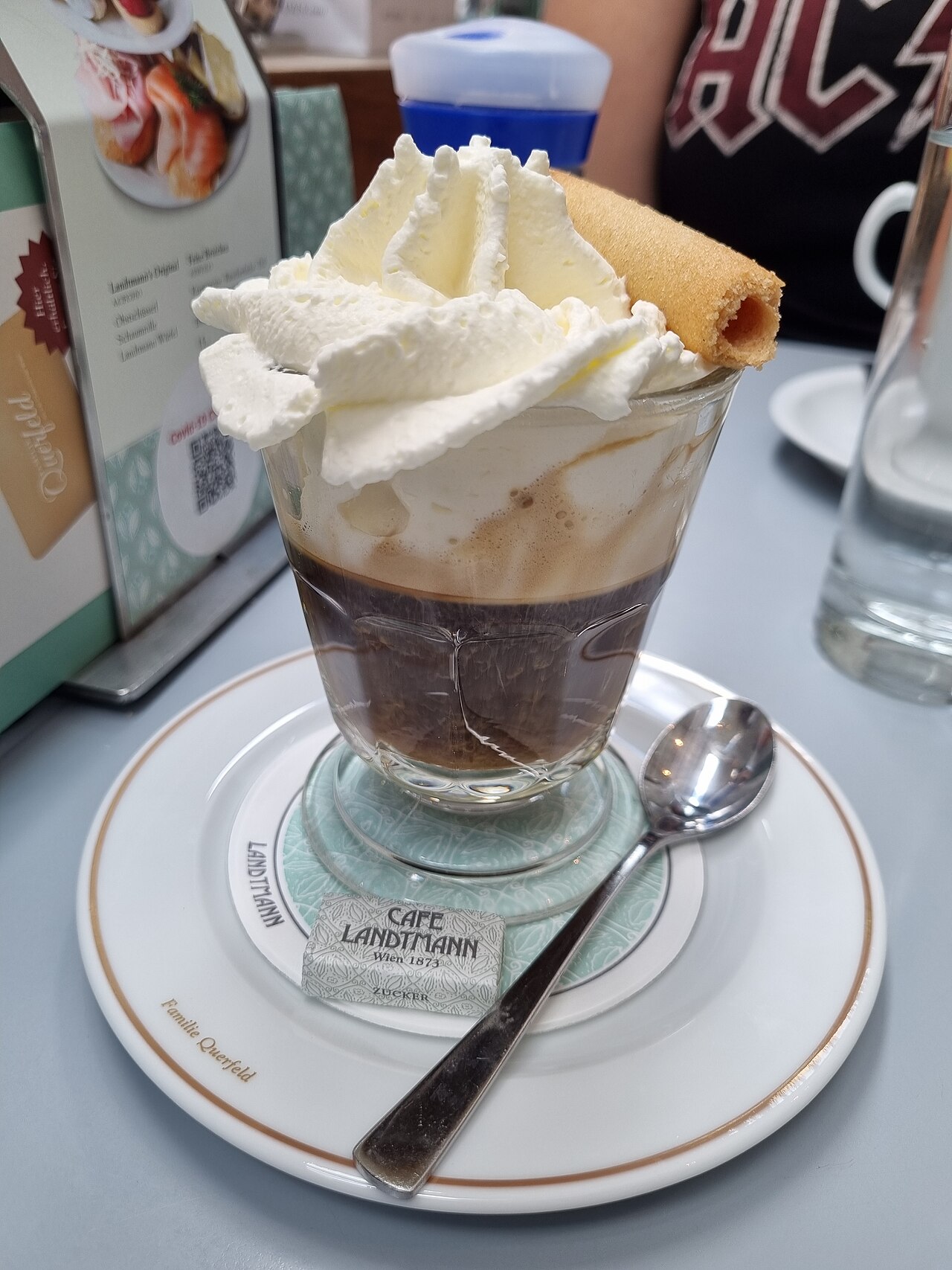
The Vienna Tourist Board describes an Einspänner as mokka in a glass with whipped cream. It distinguishes this from a Melange, which includes warm milk and milk foam. That distinction gives you a practical starting question: is the pale topping whipped cream, or is milk incorporated and foamed? Similar-looking surfaces do not make the recipes identical.
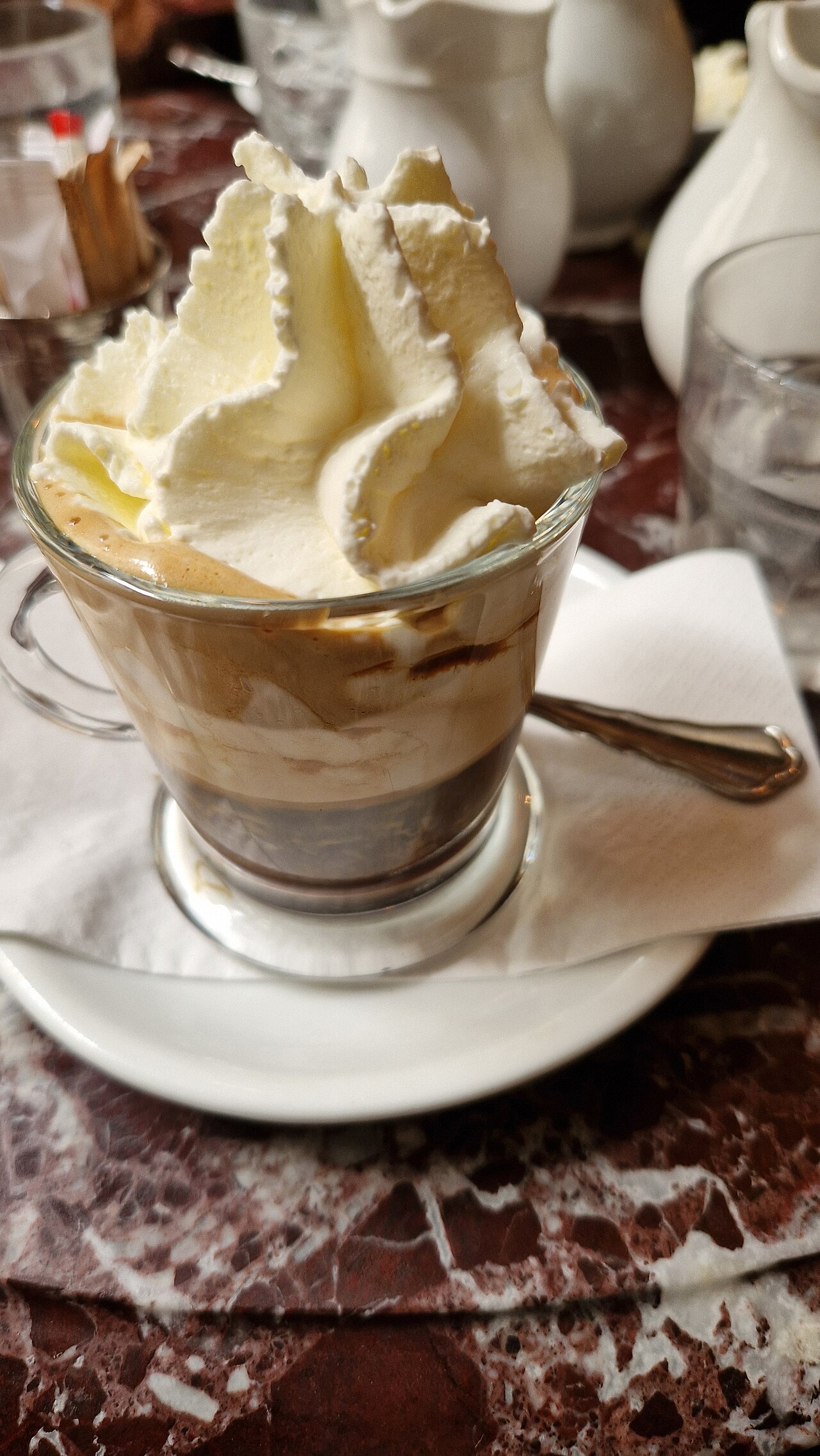
The accompanying photographs are source-identified Einspänner preparations. They illustrate the black-coffee-and-cream branch of this guide. They are not labelled as proof of chocolate hidden in the cup. When reproducing a named recipe, match both its ingredients and its preparation, rather than borrowing a photograph whose visible cream makes it seem plausible.
References: 1
Recognize the chocolate version separately
Lavazza’s Viennese Coffee recipe includes a chocolate topping in the base, an espresso lungo, whipped cream and chocolate flakes. The producer lists one and a half tablespoons of chocolate topping and three tablespoons of whipped cream. Those amounts describe that dessert-style version, not a mandatory composition for every coffee sold under a Vienna-related name.
Choose the plain cream-topped approach if you want to explore the contrast of black coffee and cream. Choose an explicitly chocolate version when that ingredient is the attraction. A brown dusting or shaving on the surface cannot tell you whether chocolate was also mixed below. Ask that question at a café instead of assuming the garnish provides a complete ingredient list.
References: 2
Choose a glass for hot coffee and cream
For a home cream-topped coffee, use a stable vessel approved for the hot liquid you will put in it. A decorative cold-drink glass is not automatically suitable. Leave room above the coffee for the topping and for a spoon to reach the drink without pushing cream over the edge. A handle is useful only if the vessel is designed and safe for the task.
Prepare the vessel, saucer and spoon before brewing. If you wish to warm the serving vessel, do so according to its care instructions. The aim is organized service, not a universal ritual. A large mound of topping is difficult to manage in a very small glass; reduce the portion or choose a suitable larger vessel rather than balancing it precariously above the rim.
Prepare cream independently of the coffee
Select cream labelled as suitable for whipping and follow its preparation directions. Keep it cold until the preparation stage and use a clean bowl and appropriate whisk or mixer. Work toward a spoonable texture that holds a soft mound rather than continuing automatically until it is very stiff. Stop the equipment before checking its texture with a utensil.
Decide separately whether to sweeten the cream. A prepared topping may already contain sugar or flavourings, while plain whipping cream lets you choose additions. Read the actual ingredients, including those of a non-dairy alternative. Replacing the topping changes the recipe, and the substitute need not behave identically on hot coffee. Label the home variation clearly if serving others.
Brew first, top last and serve
Prepare the black coffee according to your equipment’s instructions and chosen serving size. If sweetening the coffee itself, incorporate that before covering the surface. Spoon the prepared cream gently over the coffee, adding enough to provide the contrast you want while keeping the vessel easy to handle. For a first attempt, an easily managed mound is more useful than a towering presentation.
Bring the cup to the table promptly with a spoon. You can sample the coffee through the cream or gently mix some in, according to your preference. The interaction changes as the cream warms and blends into the liquid. A finished cup is a changing preparation, so a perfect border between dark coffee and white topping is not a condition you must maintain.
Build chocolate coffee without confusing the stages
For the chocolate version, incorporate the recipe’s chocolate base with the coffee before adding whipped cream. Follow the particular chocolate product’s preparation instructions rather than treating sauce, solid chocolate and dry cocoa as equal spoonfuls. Stir at the bottom where unmixed topping can remain, then add the cream and any optional decorative flakes.
This order keeps a mixing problem from disappearing under a beautiful topping. If the first sip is mostly black coffee and the last is thick chocolate, reconsider incorporation before increasing the chocolate quantity. Whipped cream should not be used to conceal a base whose ingredients have not combined as intended. Prepare one clear version before layering several syrups and garnishes.
Troubleshoot the topping and the balance
If the cream immediately disperses more than you wanted, review its texture and the way it was placed on the coffee. If it feels overly stiff, use a gentler preparation next time. If the entire cup tastes too sweet, identify whether the sweetness came from the coffee, cream, chocolate or several additions together. Reducing one named component is easier to repeat than simply asking for a lighter coffee.
If the drink cools before you enjoy it, review service timing and portion size rather than repeatedly reheating a topped glass. Cream preparation, brewing and finishing should fit into a short sequence. For several people, have the cream ready and make the coffee servings close to service. Do not promise that a large preassembled tray will look and taste unchanged after waiting.
Order with a recipe question, not a geographical guess
Ask whether the shop’s Viennese coffee is black coffee with whipped cream, contains chocolate, or includes milk in the base. If the menu says Einspänner, ask about the coffee portion and whether its cream is sweetened when that matters to you. A Vienna-related name does not identify a roast level, a caffeine quantity or a nutritional value.
Use the café’s ingredient process for any dietary requirement and include the garnish in the question. If you want plain coffee and unsweetened cream, state both. If you want the chocolate version, ask whether it is made with a sauce or another preparation. These details communicate your intended cup more accurately than requesting extra Viennese style.
One topping, two clearly named coffees
Illustrative home service: two guests want cream-topped coffee, but only one wants chocolate. The host prepares the same whipped cream, makes a plain black-coffee base for one vessel and a properly mixed coffee-and-chocolate base for the other, then tops both. They are described separately at the table rather than presented as interchangeable cups because their white toppings look similar.
Questions
Does Viennese coffee always contain chocolate?
The cited Lavazza version does, while the tourist board’s Einspänner reference describes black coffee and whipped cream. Read the particular menu or recipe.
Is a Melange the same drink?
The Vienna Tourist Board describes warm milk and milk foam in a Melange. That is a useful distinction from a black coffee topped with whipped cream.
Must the cream remain separate?
The appearance changes during service. Choose whether you enjoy sipping through the topping or gently mixing some into the coffee; do not treat a disappearing border as proof of a failed drink.
Sources and photography
Photographs are credited beside each image. Their recorded capture dates describe the images; check the current visitor or product information linked above when planning.