Café bombón: layer espresso over condensed milk, then mix for drinking
Café bombón combines espresso and sweetened condensed milk in a small serving. The pale base makes an attractive layer, but its main role is ingredient, not decoration. Choose the correct milk product, measure a manageable portion and stir the finished drink before deciding whether its sweetness and coffee balance suit you.

Begin with the two-component version
Nespresso’s Spanish guide describes espresso with condensed milk and recommends a coffee-forward starting proportion while allowing personal adjustment. It distinguishes the two-ingredient base from versions with extra milk foam, cocoa or other additions. This guide starts with that simple combination so the coffee and condensed milk remain the decisions you can understand.
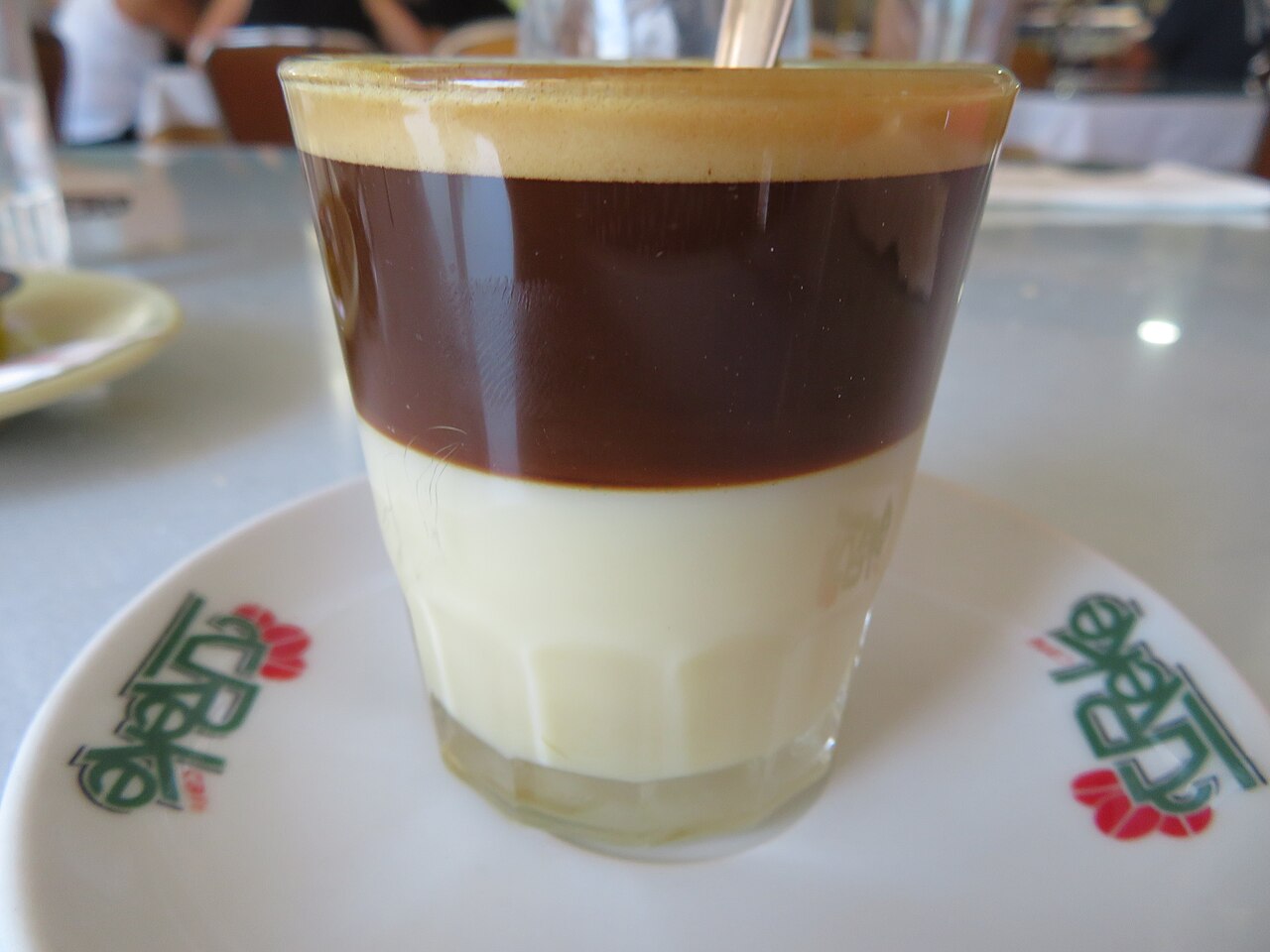
The two photographs are source-identified café bombón servings. Their visible pale layers occupy different portions of the glasses, but the pictures do not provide measurements. A glass can widen toward the top, and cream or foam can add another apparent band. Use a recipe or an actual measure when you want to repeat the balance rather than copying a line in a photograph.
References: 1
Buy sweetened condensed milk deliberately
Carnation explains the relevant distinction: sweetened condensed milk contains added sugar, while its evaporated milk does not. The two cans are not interchangeable ingredients merely because both contain concentrated milk. For the sweet, thick base in this preparation, identify sweetened condensed milk clearly on the product rather than relying on a familiar package colour.
Read the ingredients and storage directions on the container you buy. A substitute made from another base is a separate product with its own sweetness and consistency. If serving someone else, name the ingredient you actually used. A pale layer cannot communicate dietary suitability or establish that two different brands or formulations will taste identical.
References: 2
Choose a small reference serving
For an illustrative first home cup, try 40 millilitres of espresso with 15 millilitres of sweetened condensed milk. These are practical starting quantities, not an official universal café bombón formula. They make a coffee-forward small drink with room to adjust a later serving. Use a vessel larger than the combined liquid volume and suitable for hot coffee.
Measure the condensed milk before pouring the coffee. A tablespoon measures volume, while a scale measures mass; thick condensed milk should not be treated as though one millilitre necessarily weighs one gram. Use one consistent measurement method instead of switching between a scale reading and an unrelated spoon count. The goal is a recipe you can recognize next time.
Build a clear layer without chasing perfection
Put the measured condensed milk into the bottom of the serving vessel. Prepare the espresso according to your machine’s instructions and pour it gently over the base. If layering is important to you, Nespresso suggests using a spoon to soften the coffee’s impact. Work slowly and keep your hands clear of hot liquid rather than pouring from an unnecessarily high position.
A clear, heat-suitable glass lets you see the layers, but the drink does not require a particular branded vessel. An opaque espresso cup can still hold the same ingredients. If the layers partly mix, the recipe has not automatically failed. Avoid remaking a balanced cup solely because it lacks the sharp border seen in a carefully timed photograph.
References: 1
Stir all the way to the base
Once you have enjoyed the layered appearance, stir with a suitable small spoon, reaching the condensed milk at the bottom and incorporating it through the coffee. Taste when the liquid is comfortable to drink. A sip taken only from the dark upper band is not a fair assessment of the assembled coffee-and-milk recipe.
If the last mouthful is a thick sweet deposit, the base may not have been mixed completely. Check incorporation before concluding that you need a different coffee. A glass filled to the rim makes this stage awkward, so leave room at the start. A clean saucer gives the sticky spoon somewhere practical to rest after mixing.
Change the balance instead of hiding it
If the mixed serving is too sweet, use less condensed milk next time while keeping the coffee serving comparable. If it is too coffee-forward, increase the milk modestly in a later serving. Adding plain milk is possible, but that creates a different three-component balance. Identify the change rather than assuming a larger pale portion is still the same measured recipe.
Do not add a separate spoonful of sugar automatically before tasting: the condensed milk already contributes sweetness. Likewise, chocolate sauce or a flavoured cream can introduce another source. Keeping the first serving simple makes a preference easier to act on. A stronger-tasting coffee might change the contrast, but it does not remove sugar from the milk you added.
Order the version rather than the photograph
Ask how the café prepares its bombón, whether the base is sweetened condensed milk and whether it adds foam, cocoa or alcohol. Some named variations include more than the simple base, so a menu description matters. If you want less sweet, ask whether the condensed-milk portion can be reduced; a fixed premix may offer different choices from an individually assembled glass.
For a group, ask preferences before pouring several identical servings. A guest who wants ordinary milk coffee may not want the same drink with a larger coffee portion. Serve the small cup with enough room to mix and identify any additional ingredients. This gives people a usable drink rather than an unexplained layered object they must guess how to approach.
Adjust sweetness without doubling the drink
Illustrative serving: Alex combines40ml espresso with15ml sweetened condensed milk, stirs thoroughly and wants less sweetness. The next cup uses the same coffee with10ml condensed milk. Alex compares that change before selecting a different coffee or adding plain milk. The numbers are a home adjustment example, not a tested ranking of ratios or brands.
Questions
Is the pale layer ordinary cold milk?
The two-component recipe here uses sweetened condensed milk. Check the product and café recipe rather than deciding from the photograph.
Must the layers stay separate?
They can be part of the presentation, but mixing distributes the condensed milk through the coffee for drinking. A partly mixed border is not proof of failure.
Can I make it less sweet?
Reduce the condensed-milk portion if the preparation allows it. Understand that changing the quantity also changes the milk contribution, and taste the complete mixture before adding sugar.
Sources and photography
Photographs are credited beside each image. Their recorded capture dates describe the images; check the current visitor or product information linked above when planning.