Dalgona coffee: whip the coffee topping before building the milk glass
Dalgona coffee puts a thick whipped coffee mixture above milk. The upper layer is made separately, so a finished glass is more than ordinary iced coffee with a little foam. Use an explicit recipe with instant coffee, sugar and water, leave space for the topping, and stir the assembled drink before judging its balance.
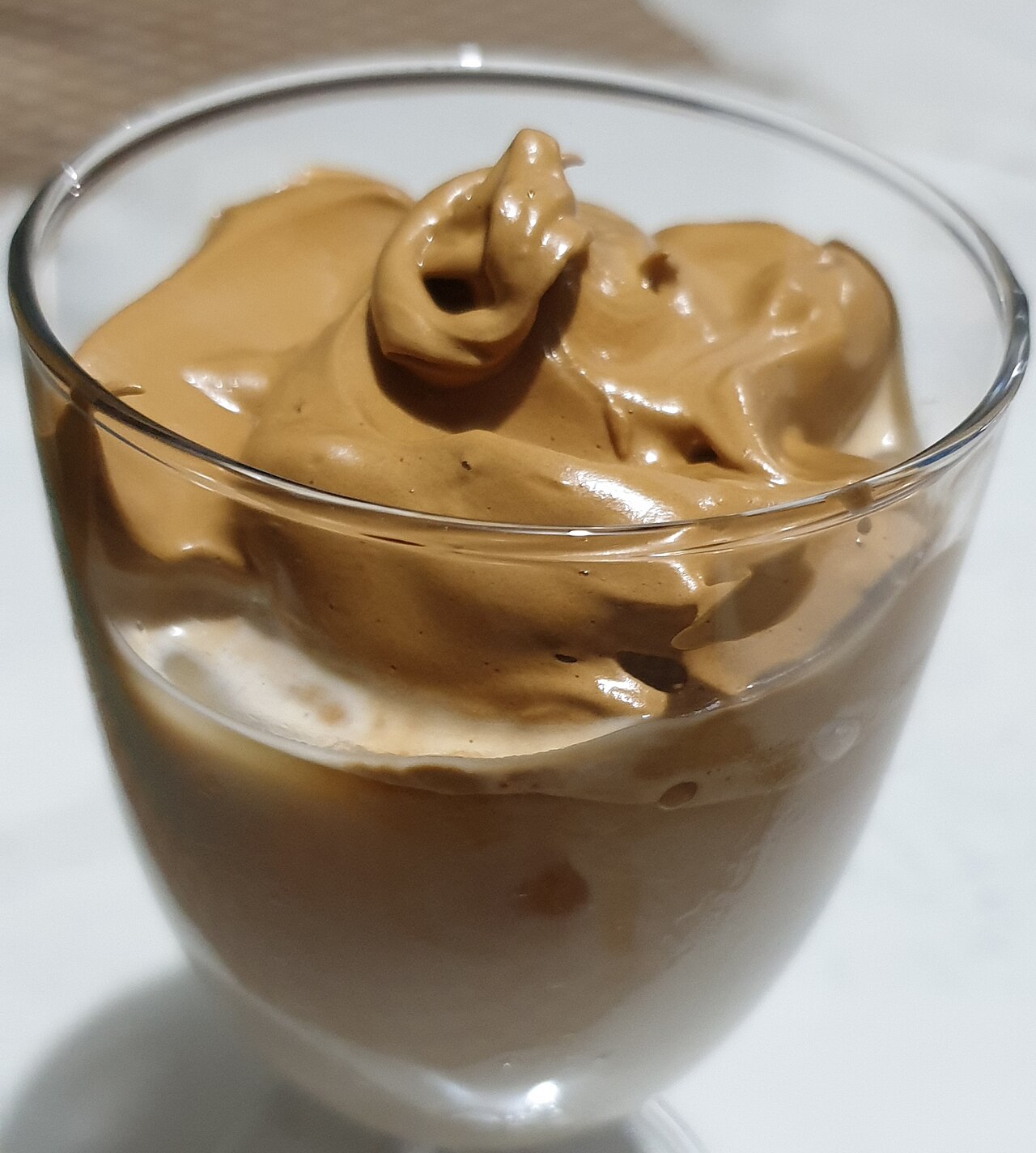
Identify what is being whipped
Nestlé Professional’s iced recipe combines instant coffee, granulated sugar and water in a bowl, then whips that mixture until it holds a dense foamy shape. Milk is the separate lower component. The coffee mixture is not whipped dairy cream and the pale liquid below is not an espresso shot. This division explains both assembly and why an undisturbed glass can taste very different at its top and bottom.
Choose an instant coffee identified in the recipe or a clearly described equivalent product. Ordinary ground coffee intended for filtering is a different material and cannot simply replace soluble coffee spoon for spoon in this method. Read the packet instead of assuming that any brown coffee powder dissolves. A good starting result depends on using the ingredient the preparation actually calls for.
References: 1
Use a complete formula rather than a viral caption
The cited Nestlé Professional recipe uses two tablespoons each of instant coffee, granulated sugar and cold water, with milk and ice for service. Equal spoon volumes do not mean equal weights of these different ingredients. Use a measuring spoon and the named unit, and do not mistake a heaped eating spoon for a standardized measure.
The mixture makes a substantial topping. You can prepare the published batch and decide how much to place on the serving glass rather than assuming the whole bowl must be piled onto a small drink. Avoid doubling the coffee because you want a taller photograph. Cup capacity, preferred coffee intensity and the usable milk portion should determine the serving you intend to drink.
References: 1
Choose a bowl and whisk that suit the small batch
Use a clean bowl deep enough to contain splashes but narrow enough that the whisk can engage the mixture. A tiny puddle in an extremely wide bowl can be awkward to whip. Add the measured coffee, sugar and water, then mix with an appropriate whisk or hand mixer as the recipe directs. Follow the equipment’s instructions and keep electrical components away from splashes.
Watch the texture as well as the colour. The useful endpoint is a thickened mixture that can hold its foamy shape, not simply a lighter shade after a few strokes. Hand whisking and different mixers can take different amounts of effort. Stop the machine before scraping down the bowl or testing with a spoon, and resume only when the utensil is clear.
Build milk and ice below the topping
Prepare the serving glass while keeping the whipped mixture in its bowl. Add milk and the desired ice, leaving a generous empty space above the liquid. The cited professional recipe fills approximately three quarters of the glass with milk and ice before topping. This is a capacity guide, not a requirement to overflow a narrow glass with a large batch of foam.
Select milk or a suitable alternative according to your preference and the product’s ingredients. A substitution changes the flavour and may change how you experience the coffee mixture. Keep it identifiable when serving someone else. The recipe does not require an expensive speciality milk to understand the basic technique, nor does a pale lower layer prove which milk was used.
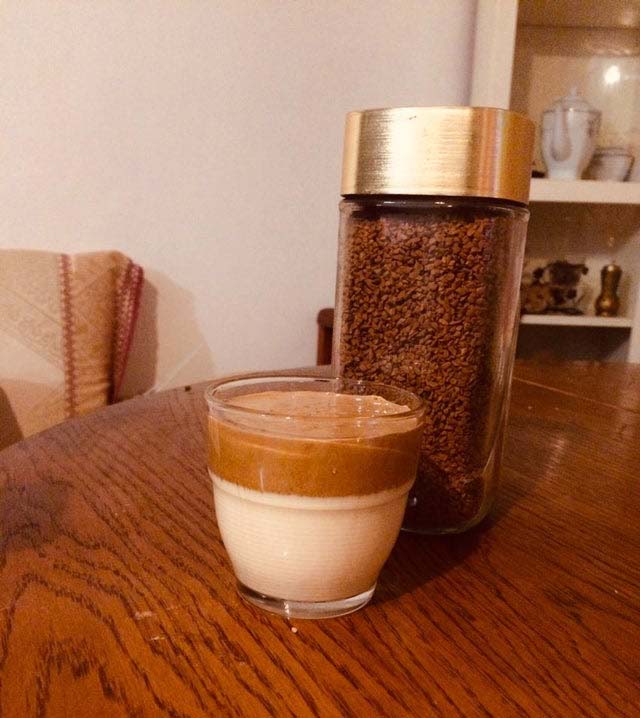
Spoon, then stir for drinking
Spoon the whipped coffee gently onto the milk, working in manageable portions. Keep the outside and rim clean enough to hold the glass securely. Stop when you have a topping that fits the drink rather than forcing the remaining bowl contents onto it. A mound balanced far above the edge may look impressive while making the first stir unnecessarily messy.
Nestlé Professional explicitly instructs the drinker to stir before drinking. This is useful guidance: the concentrated upper mixture and the milk beneath are separate components until combined. Leave space for that action and provide a suitable spoon. Judge the coffee-to-milk balance after mixing rather than concluding from a spoonful of concentrated foam that the whole drink is inevitably too strong.
References: 1
Troubleshoot a thin or gritty mixture
If the mixture stays thin, confirm the measured water amount, that the coffee is instant, and that the whisk is actually reaching the liquid. Do not keep adding unmeasured water to help an ingredient dissolve and expect the same structure. If grains remain, review incorporation and the product choice before covering the bowl’s contents with milk and calling it finished.
If the mixed drink is too strong for your preference, use less topping or more milk in a suitable glass on the next serving. If it is too sweet, use a separately verified lower-sugar recipe rather than promising that an arbitrary sugar omission produces identical foam. For a first preparation, establish the baseline before changing sugar, coffee, water and milk together.
Distinguish equipment-based espresso variations
Nespresso publishes a Dalgona-inspired recipe using 40 millilitres of espresso, sugar and a specific Barista Recipe Maker program, poured over milk and ice. That is a documented equipment variation. Its existence does not mean a freshly brewed espresso will behave exactly like instant coffee when substituted into the manual three-ingredient whipping method.
If using a machine recipe, follow its quantities and device instructions. If using the instant-coffee recipe, follow that method. Mixing the ingredient list from one with the program or timing from another leaves you without a clear preparation to troubleshoot. Name the version you made when sharing a recipe so the next person knows whether ordinary instant coffee or specialized equipment is required.
References: 2
Serve a useful portion and keep additions separate
Treat chocolate dusting, flavour syrup or cookie crumbs as optional finishing ingredients. They do not repair an under-whipped mixture or determine whether the coffee dissolved. Start without several competing toppings if your purpose is to learn the coffee layer’s texture. Ask about any extras on a café version, especially if its menu photograph shows only the final surface.
Prepare the drink close to service and follow the ingredient products’ storage directions. This guide does not assign a universal shelf life to a bowl of homemade whipped coffee. If the remaining topping does not fit your intended serving, a smaller later batch is a better plan than assuming a very large portion is necessary to reproduce an online image.
A topping portion is adjustable
Illustrative preparation: Jo makes a measured batch and spoons part of it onto milk, leaving room to stir. After mixing, the drink is more coffee-forward than Jo prefers. On the next glass, Jo uses less of the same topping with the same milk portion before changing the whipping recipe itself. This is a practical serving adjustment, not a laboratory result or a nutritional claim.
Questions
Can I whip ordinary coffee grounds?
The manual recipe cited here uses soluble instant coffee. Ground beans intended for brewing are not the same ingredient.
Should I eat the top separately?
You may taste it, but the cited professional recipe instructs stirring before drinking. Assess the finished balance after the coffee mixture and milk are combined.
Can espresso work?
The cited Nespresso variation uses a particular machine program. Follow that separate recipe rather than assuming a direct substitution into hand-whipped instant coffee.
Sources and photography
Photographs are credited beside each image. Their recorded capture dates describe the images; check the current visitor or product information linked above when planning.