Espresso con panna: finish a short coffee with a measured cream topping
Espresso con panna brings whipped cream to a short espresso rather than turning coffee into a large milk drink. Its apparent simplicity leaves several choices: coffee serving, topping texture, sweetness and how much cream you actually add. Prepare those decisions separately so a small cup remains easy to serve and enjoyable to drink.
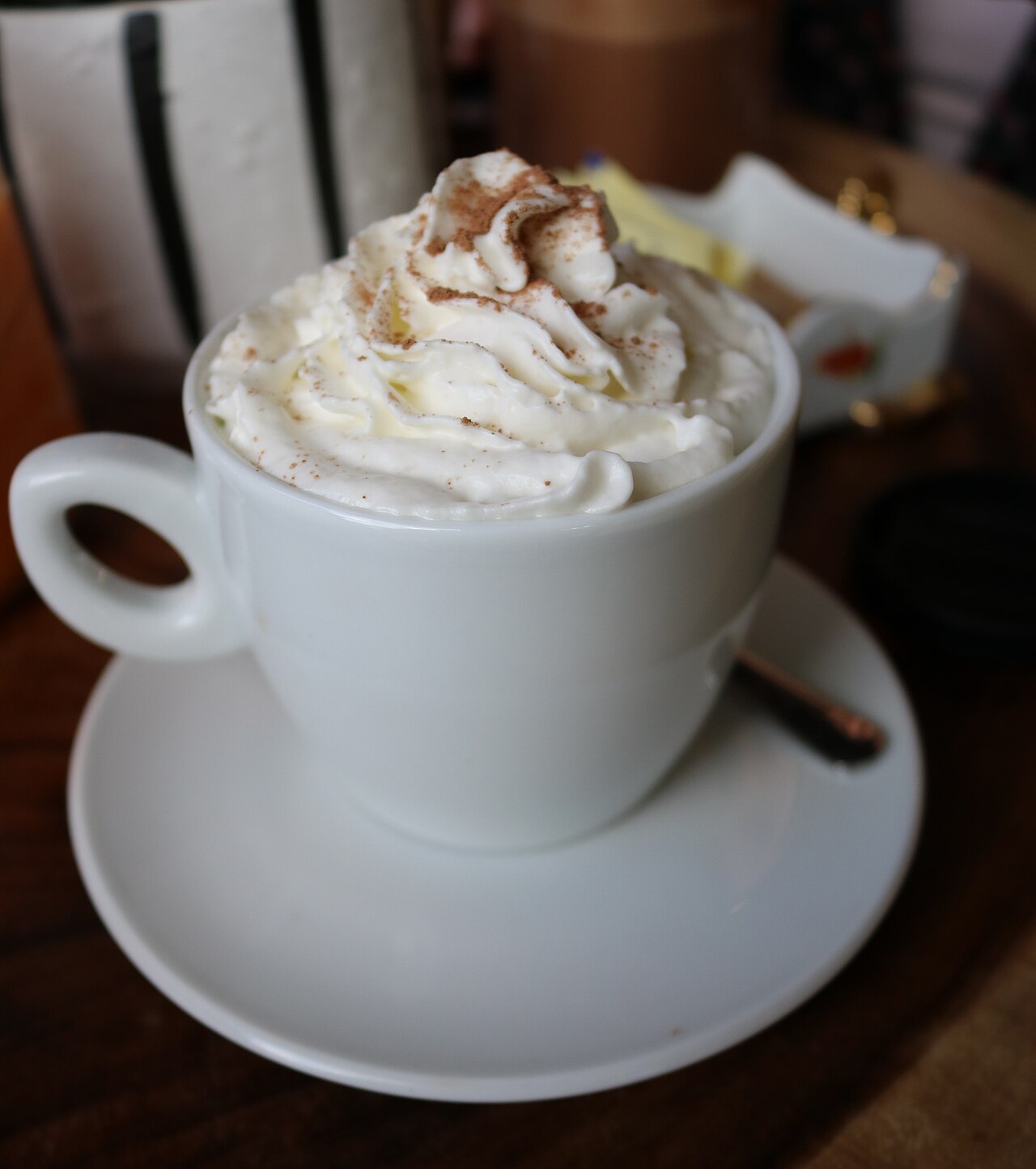
Identify coffee with a cream topping
Nespresso’s espresso con panna recipe prepares a 40-millilitre espresso and spoons whipped cream over it. Lavazza’s published coffee menu likewise describes espresso sweetened by whipped cream. These sources establish the central combination. They do not require every café to use the same coffee volume, vessel or decorative shape of topping.
The photographs are specifically identified as espresso with whipped cream by their creators. They show the actual style rather than generic latte art renamed to fit the article. A white surface alone cannot distinguish cream from milk foam; the source description matters. At a café, the same principle means reading the recipe or asking the maker rather than judging only the cup.
Separate the whipping batch from the serving portion
The Nespresso recipe lists 100 millilitres of cold cream loaded to the minimum mark of its named device, then instructs the maker to spoon the whipped result onto the coffee. The device’s minimum batch is not a universal instruction to empty all of that cream into one espresso cup. This distinction is useful whenever appliance recipes list preparation quantities larger than the final garnish.
If using that equipment, respect its minimum and maximum marks and relevant instructions. If whisking by another suitable method, follow the cream and equipment directions instead of copying an appliance program. Decide how much topping fits the serving vessel after it is prepared. Keep batch preparation and the portion served as two explicit decisions.
References: 1
Choose cream you can prepare predictably
Use a product labelled for whipping if whipping is the task. Read whether it is already sweetened or flavoured and whether it is dairy cream or another topping. A carton of ordinary pouring milk does not perform the same role merely because it is pale. A prepared aerosol topping is another option with its own ingredients and handling instructions, not an invisible equivalent of plain cream.
Keep the cream cold as directed and prepare it with clean utensils in a suitable bowl or appliance. Watch its texture rather than treating an approximate timing as a guarantee. Aim for a topping that can be spooned onto the coffee without immediately running off the spoon, while remaining pleasant to eat. Stop the mixer before inserting a spoon or scraping the bowl.
Plan coffee sweetness before hiding the surface
Choose whether to sweeten the espresso itself. In the cited Nespresso preparation the coffee sugar is optional, even though a quantity is listed among the ingredients. If you use it, stir it into the coffee before the cream is added. This avoids disturbing the topping solely to reach undissolved sugar beneath it.
Taste expectations matter: unsweetened coffee with sweetened cream is a different balance from sweetened coffee under unsweetened cream. Neither can be described accurately by counting only visible sugar packets. At home, begin with one clearly identified source of sweetness if you want to understand the combination. Additions can be adjusted on a later serving without turning the small cup into a mixing bowl.
References: 1
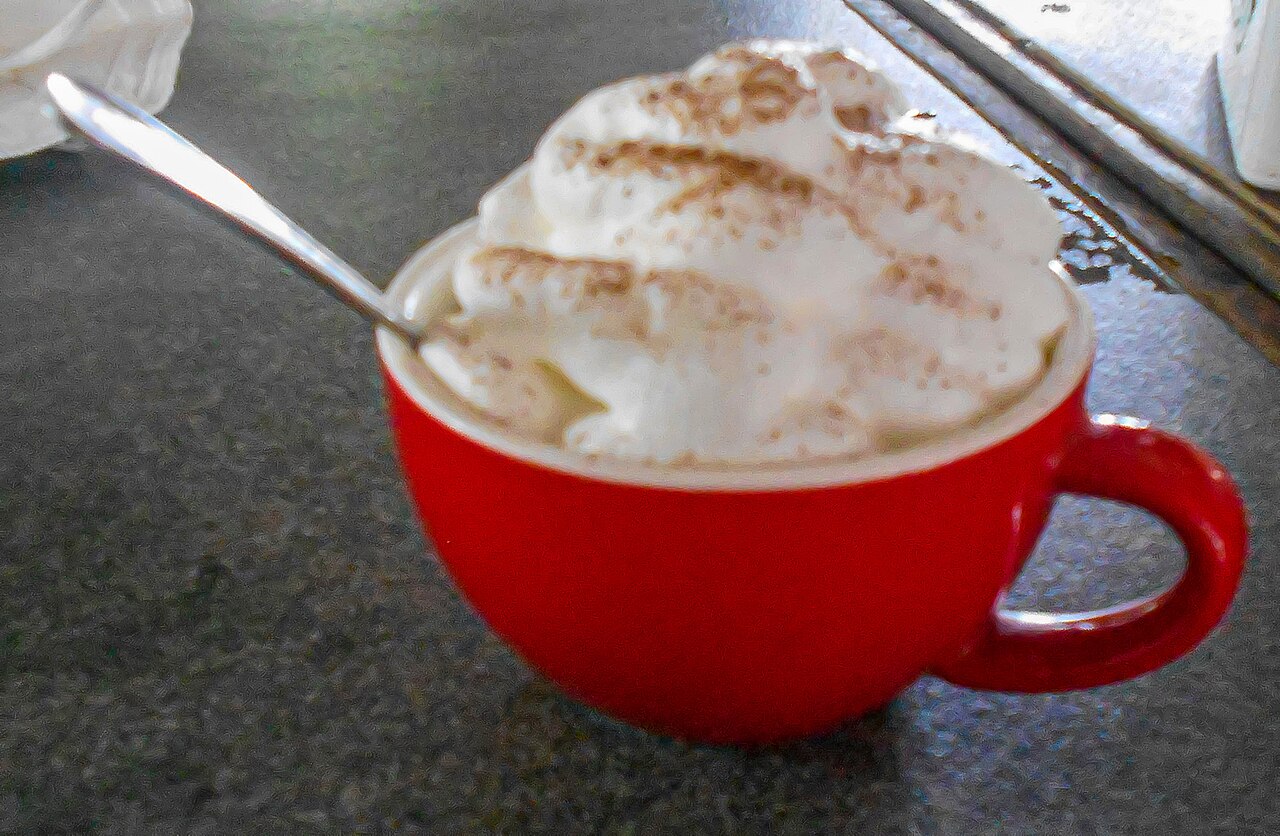
Prepare a serving vessel with headroom
Choose an espresso cup or other stable vessel appropriate for hot coffee, with room for the intended topping. A cup that holds a black espresso only when filled almost to the brim leaves little space for cream. Put a saucer and small spoon nearby before brewing so the finished drink can go directly to the table.
Prepare the espresso according to your machine’s instructions and the coffee you use. This guide does not impose one extraction time or grind setting on different equipment. If you are using a published 40-millilitre recipe, measure that coffee output rather than interpreting the entire cup capacity as the coffee portion. A larger cup need not require a longer, more diluted coffee extraction.
Spoon the topping gently and serve
Once the coffee and any chosen sugar are ready, add a modest spoonful of whipped cream. Look at the vessel’s remaining room before adding more. The aim is an intentional coffee-and-cream serving, not the maximum amount a precarious mound can hold. Set the spoon on the saucer rather than pushing it vertically into a cup that is already full.
Serve promptly. Try a small sip through the cream or use the spoon to take a little cream with coffee, allowing the hot liquid to cool enough for comfort. You may gently mix some cream into the espresso if you prefer that texture. A home serving does not need an elaborate rule about preserving the exact silhouette of the topping.
Adjust the next cup using a specific observation
If the cream overwhelms the coffee, try a smaller topping rather than assuming the answer must be a much larger coffee serving. If the topping seems too sweet, identify whether it was pre-sweetened before changing the espresso. If a stiff mound is awkward to sip through, review whipping texture. Each adjustment targets a distinct part of the preparation.
If the cream disperses quickly, check that the product was suitable and prepared as intended, then consider whether a somewhat different texture would suit you. Do not repeatedly reheat a finished cream-topped espresso to chase its initial appearance. Make a small cup close to the time you will drink it, and treat the changing mixture as part of the experience.
Order a small drink with clear ingredient requests
Ask for espresso con panna and confirm the coffee serving if the menu gives no detail. If you care about sweetness, ask whether the cream is sweetened and whether sugar is also added to the espresso. If you want no chocolate garnish, specify that addition separately; it is not part of the two-component definition used in this guide.
For dietary questions, check the actual topping and the café’s preparation process. A non-dairy coffee order is not established by removing ordinary milk when the topping itself is cream. If no suitable alternative is available, choose another clearly described drink. Avoid treating a small cup or a modest topping as evidence of any particular nutritional or caffeine quantity.
Reduce the topping before extending the espresso
Illustrative serving: Sam enjoys the first coffee sip but finds the cream portion too large. For the next cup, the same espresso serving receives a smaller spoonful of the same prepared topping. Only after trying that change does Sam consider a different coffee portion. The sequence keeps a cream-quantity preference from being confused with a machine extraction problem.
Questions
Does the recipe’s100ml cream all go into one cup?
The cited recipe uses that quantity to meet a device’s minimum preparation level, then spoons cream onto the espresso. Do not treat the machine batch as a universal single-cup topping portion.
Is milk foam an equivalent topping?
It is a different ingredient and preparation. If that is what you want, describe the change rather than assuming it will reproduce whipped cream.
Can I omit sugar?
The cited coffee sugar is optional. Also check whether the topping itself already contains sweetness; omitting a separate spoonful does not describe every ingredient in the drink.
Sources and photography
Photographs are credited beside each image. Their recorded capture dates describe the images; check the current visitor or product information linked above when planning.