Citrus with coffee: distinguish a peel garnish from juice or syrup
A citrus accent can reach a coffee drink through peel, juice, syrup or a flavored mixer. Those are different ingredients and different design choices. Read how the particular serving uses citrus before deciding that a visible slice explains the entire flavor or that every citrus coffee will taste alike.
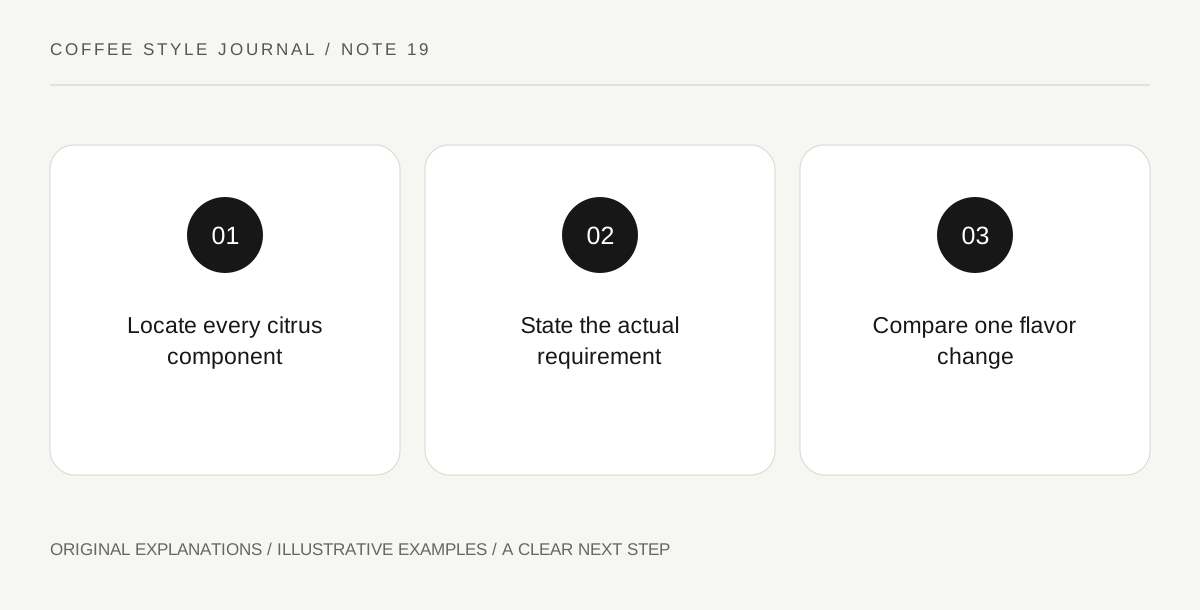
Original explanatory diagram. Read the full method and limitations below.
Ask what the visible garnish represents
A slice or twist may be decorative, aromatic or part of the intended mixing. Ask the cafe what it contributes and whether another citrus preparation is already included. Nespresso lists a pink-grapefruit espresso-tonic example, showing that a named citrus ingredient can be central rather than incidental. Do not infer the complete composition from the garnish alone. A drink can contain a flavored mixer even if the visible fruit is removed before service.
Separate aroma from liquid balance
A peel can create an aromatic impression without being the same ingredient as a measured juice portion. Record what the venue actually uses rather than guessing from smell. If the drink tastes sharp, bitter or sweet, ask which component plausibly contributes that impression. Coffee, mixer and fruit preparation can all be involved. Your note should describe the served composition and your perception, not claim to diagnose an ingredient quantity from one sip.
Check the reason for omitting an ingredient
If you merely prefer less citrus flavor, ask what can be adjusted. If you need to avoid an ingredient for a personal health or allergy reason, make the full concern clear to the venue and use appropriate professional guidance where relevant. Removing a decorative slice may not remove citrus already present elsewhere. Do not treat a server's ability to omit garnish as proof that the whole drink meets every dietary or medical requirement.
Make one interpretable comparison
Try a simpler version on another occasion if available, retaining the same coffee base and mixer when practical. Record which citrus element changed. There is no need for a large simultaneous tasting to answer this question. If the cafe cannot separate a prepared flavored base, choose another drink rather than requesting an impossible reconstruction. A useful preference is specific, such as enjoying peel aroma but preferring no juice addition, without turning it into a claim about authenticity or healthfulness.
Illustrative worked example
Illustrative scenario: a customer asks to remove a grapefruit garnish because they do not want that ingredient. Staff explain that the mixer also contains a grapefruit component. The customer chooses a different drink whose recipe is clear. In a separate flavor-only comparison, another customer keeps the same base and omits an optional citrus syrup, making it possible to understand which change affected the sweetness.
Questions that come up
Can I assume citrus aroma means real juice was added?
No. Read the actual recipe and ingredient information. An aroma, peel garnish and juice portion are different kinds of evidence.
Does removing a fruit slice make a drink suitable for every restriction?
No. The ingredient may occur elsewhere, and personal restrictions can require more than a visual change. Discuss the complete recipe and preparation appropriately.
References and scope
These sources support the factual background. Examples and exercises are original illustrative teaching material. References do not imply endorsement.
- Nespresso: Coffee Recipes — Manufacturer examples include an espresso-tonic drink and flavored variations, rather than one universal cafe formula.