Coffee soda: ask what the bubbles are carrying
A coffee soda can be a simple coffee-and-sparkling-water combination or a more elaborate flavored drink. The bubbles identify a texture, not a complete recipe. Ask what the carbonated component contains, then consider coffee, sweeteners and garnishes as separate choices.
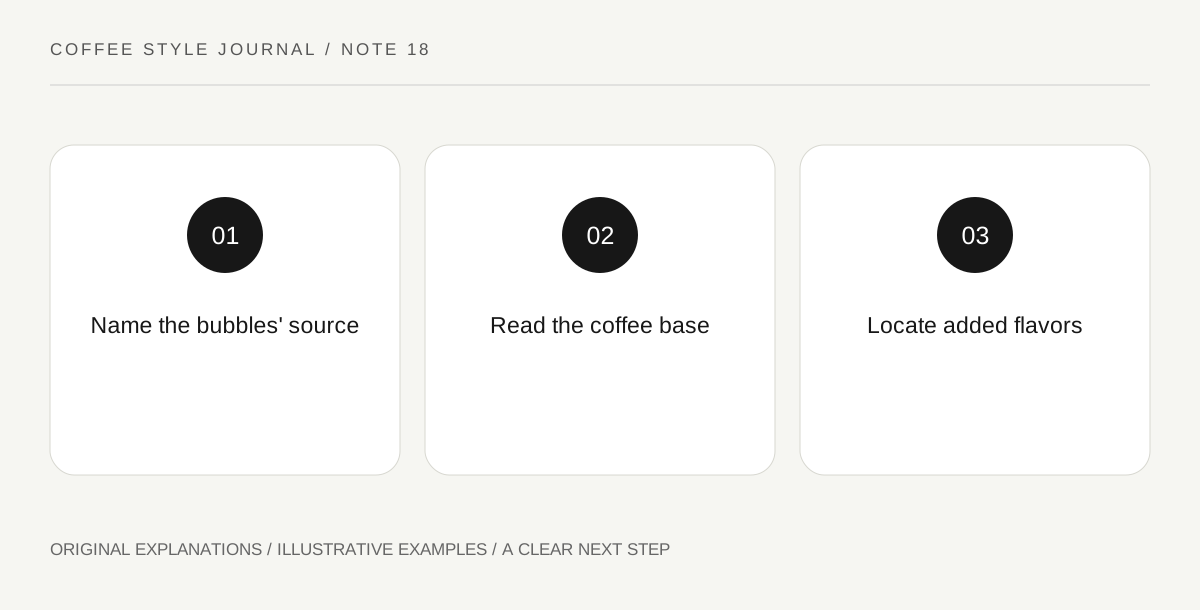
Original explanatory diagram. Read the full method and limitations below.
Identify the carbonated ingredient
Nespresso's milk-and-ice discussion points to a separate coffee-and-sparkling-water recipe, illustrating that sparkling water can be a deliberate component of a coffee drink. A cafe may use plain sparkling water, flavored soda or another mixer. Ask for the exact description. Clear appearance does not establish a plain ingredient. This distinction also keeps coffee soda separate from an espresso tonic whose mixer brings its own characteristic flavor and formulation.
Name the coffee component without assuming extraction
Ask whether the base is espresso, cold brew or another prepared coffee and whether the served amount changes with size. A tall fizzy glass does not tell you how much coffee went into it. Write the actual base in your note and leave unprovided numerical details blank. Do not judge the drink's caffeine content from how refreshing it feels, how quickly you can sip it or the height of the foam when it arrives.
Locate sweetness and flavor additions
A cafe might add syrup, fruit preparation or a flavored carbonated product. Identify which components are fixed and which can change. If you dislike one version, the useful question may concern the syrup rather than the coffee base. Ask about ingredients when needed, including garnishes that seem decorative. Avoid assuming that a fruit slice is the only fruit-derived ingredient or that a plain-looking soda contains no added sweetener.
Compare an ordinary sip with the integrated drink
Observe whether the serving is layered and ask how the cafe intends it to be enjoyed. Use an appropriate gentle mixing action if recommended, without creating a messy dramatic stir merely to copy a video. Note carbonation, coffee aroma and added flavor separately. A later preference can then be concrete: plainer mixer, no optional syrup or a different coffee balance. The goal is an understandable composition, not a universal ranking of sparkling coffee drinks.
Illustrative worked example
Illustrative scenario: a customer likes the idea of coffee soda but receives a version with a strong vanilla note. Asking about the recipe reveals a flavored soda base rather than a separate optional syrup. The customer chooses a plain sparkling-water version on another visit. Their note identifies the changed mixer, making the comparison useful without attributing the whole difference to the coffee beans.
Questions that come up
Can I substitute tonic and expect the same drink?
Treat it as a recipe change. Different carbonated mixers can have different flavor and ingredient profiles even when they look similarly clear.
Does fizz mean the coffee was fermented?
The serving bubbles alone do not establish a coffee-processing method. Ask about the actual mixer and preparation instead of inferring fermentation from the finished drink.
References and scope
These sources support the factual background. Examples and exercises are original illustrative teaching material. References do not imply endorsement.
- Nespresso: Coffee with Milk and Ice — The page mentions a coffee-and-sparkling-water recipe; consumer poll and health language are not relied on.
- Nespresso: Coffee Recipes — Manufacturer examples include an espresso-tonic drink and flavored variations, rather than one universal cafe formula.