Shakerato: shake coffee cold, then serve its foam without the ice
A shakerato is a short cold coffee transformed by vigorous shaking with ice, usually with sweetness included. Its tan foam is part of the preparation, not a spoonful of milk froth placed on an iced coffee. Learn how to assemble a small serving, manage the meltwater and tell a plain shakerato from a chocolate or alcoholic variation.
Identify the shaken drink
Lavazza’s Italian guide describes sweetened espresso shaken with ice and strained into a cold glass. The practical distinction is the shaking step followed by separation from the ice. Coffee simply poured over cubes is another cold preparation. A café can offer both without either being an inferior attempt at the other; decide whether you want a foam-topped short drink or a longer coffee served over ice.
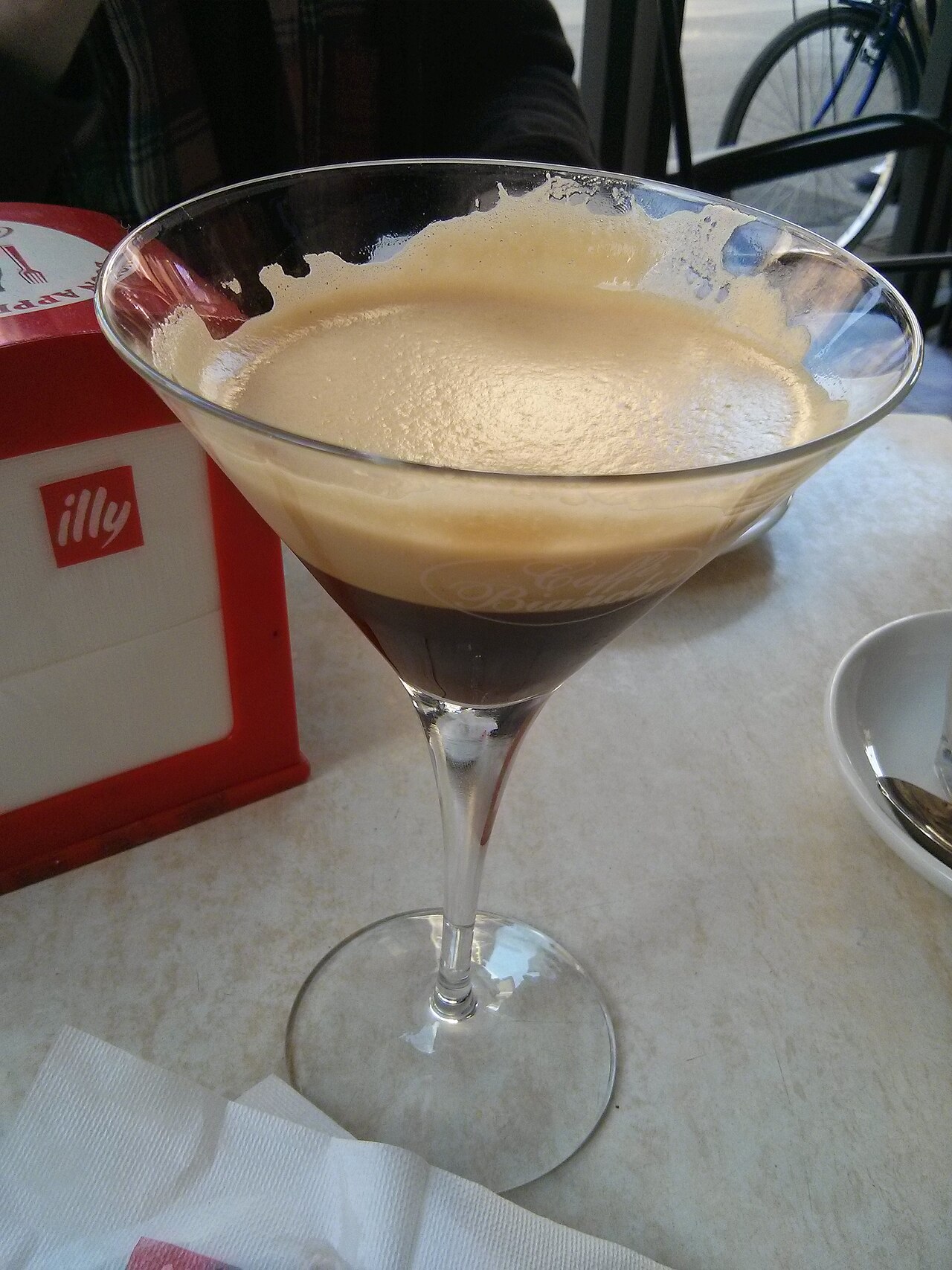
The photographs show two source-identified shakerati with dark coffee and a substantial tan head. One is in a conical cocktail glass, the other in a rounded branded glass. Neither vessel proves that the drink contains alcohol. The maker’s description establishes the coffee style; the image shows how different the presentation can look even when the drink name is shared.
References: 2
Use a small, explicit starting recipe
Nespresso’s published small recipe lists 40 millilitres of coffee, 3.5 grams of sugar and 90 grams of ice, shaken vigorously. Those figures make a concrete starting point for understanding scale, rather than a requirement for every café. Its named capsule and ice-cube mould are producer equipment choices; an ice weight is more transferable than assuming all household cubes have the same size.
Use an appropriate coffee preparation you can reproduce and measure the sugar for the first attempt. A concentrated coffee serving allows room for the water contributed by melting ice. Starting with a full mug of weak coffee and adding an arbitrary handful of cubes changes both concentration and serving volume; it is not a direct substitute for this short example.
References: 1
Prepare equipment before brewing
Have a suitable cocktail shaker, its strainer and a serving glass ready. Use the shaker according to its manufacturer’s directions, including any restrictions on hot ingredients. Do not improvise by sealing hot coffee into an unsuitable household container. Make a small serving within the equipment’s capacity and keep a secure grip on the assembled shaker during use.
Chill the serving glass with ice while you prepare the coffee, then empty that ice and water before the final pour. This prevents the finished drink from acquiring a second unmeasured dose of meltwater in the glass. Place the glass on a stable surface. The short preparation works best when you do not have to search for a strainer while the coffee is already sitting with the ice.
Dissolve sweetness and shake deliberately
Choose a recipe sequence suited to your equipment and follow it consistently. In the cited Nespresso example, sugar is placed in the shaker, coffee is extracted over it, and ice follows. Ensure the sugar is incorporated, close the equipment appropriately and shake vigorously as directed. If your shaker requires coffee to cool first, respect that instruction and describe the resulting home variation honestly.
Liquid sugar can be easier to distribute than granules, as Lavazza notes, but different syrups contain different amounts of sugar and water. Do not automatically replace 3.5 grams of dry sugar with the same weight of syrup and assume an identical recipe. Begin with the product’s directions and a small amount, then adjust a later serving if necessary.
References: 2

Strain and serve the foam promptly
Strain the shaken coffee into the emptied chilled glass. Keep the serving ice out for this preparation and leave enough room for the foam. If the shaker has a built-in strainer, use it correctly; if you need a separate one, position it before pouring. Avoid a rushed pour that sends a cube into a fragile stemmed glass.
Serve promptly rather than making a large batch and expecting the first and last glasses to retain identical foam. Take an initial sip through the foam and notice both texture and the liquid beneath. The head will evolve as it stands. A drink photographed at one moment is not a promise that a particular foam height will persist throughout a long conversation.
Separate dilution from sweetness problems
If a serving tastes watery, review the coffee portion, the ice condition and any delay before shaking and straining. Very wet, partly melted ice already contributes water before the shaking begins. Keeping the recipe small and preparing everything first helps you understand what changed. More sugar can make a weak drink sweeter without restoring its coffee concentration.
If you notice gritty sweetness at the bottom, examine sugar incorporation. If the liquid tastes balanced but the head is thin, review shaker technique and whether the equipment was filled beyond its useful capacity. These observations are practical diagnosis, not a claim that every coffee or shaker produces the same foam. Change one relevant stage before rewriting the whole drink.
Read named variations carefully
Lavazza’s US Italian Roast Shakerato recipe includes chocolate syrup, while its Summer Shakerato uses cold brew and an alcoholic cream ingredient. These are clearly described variations, not evidence that the plain coffee preparation needs either addition. A menu that uses the word shakerato may likewise add a flavour syrup or spirit, so read the accompanying ingredients.
When ordering, ask for a plain coffee shakerato if that is what you intend, and ask whether it is sweetened and whether it contains alcohol or milk-based additions. If you require no added sugar, find out whether the café can make that version and expect a different balance. A request should identify the ingredient change without promising that the modified drink will have identical texture.
Scale cautiously and compare relevant alternatives
Make one short serving first. A party-sized container of coffee, sugar and ice is not guaranteed to shake like a single portion, especially if there is little space for movement. Prepare successive small servings within the shaker’s instructions rather than treating its maximum physical volume as its working capacity. Serve each soon after straining.
Choose iced coffee when you want cubes to remain in the glass and a drink you can sip over a longer period. Choose the strained shakerato when the short, airy presentation is the attraction. Cold brew describes how a coffee was brewed; shakerato describes a finishing technique. Ask both questions when a menu combines those words instead of assuming one replaces the other.
Repair the process before adding flavour
Illustrative preparation: Leo likes the sweetness of a small shaken coffee but finds it diluted. On the next serving he keeps the coffee and sugar portions unchanged, uses fresh solid ice and has the chilled glass and strainer ready before combining the ingredients. He evaluates that process change before adding a chocolate syrup that would create another drink. This is a suggested troubleshooting sequence, not a claimed tasting experiment.
Questions
Is the foam whipped cream?
The plain shaken-coffee preparation does not require a cream topping. Ask about additions in the specific recipe; colour and a foamy head cannot establish all ingredients.
Should cubes remain in the serving glass?
The strained preparation described here removes the shaking ice. Coffee served over ice is another useful style, but the service and continuing dilution differ.
Does a martini glass mean it is alcoholic?
No. A glass is a serving vessel. Check the named ingredients: some shakerato variations contain alcohol and plain coffee versions need not.
Sources and photography
- Nespresso: Caffè Shakerato
- Lavazza Italy: Caffè shakerato recipe
- Lavazza US: Italian Roast Shakerato
- Lavazza US: Summer Shakerato
Photographs are credited beside each image. Their recorded capture dates describe the images; check the current visitor or product information linked above when planning.