Nitro cold brew: understand the tap, the can and the foam
Cold brew names a way of extracting coffee; nitro identifies an additional nitrogen treatment and service. That distinction helps you understand a menu, serve a ready-to-drink can and compare versions without assuming a creamy-looking head contains milk. Start by identifying the base coffee and additions, then follow the instructions for the actual product in your hand.
Separate brewing from nitrogen service
Starbucks describes its Nitro Cold Brew as its cold-brewed coffee infused with nitrogen as it pours from a tap. The producer connects the microbubbles with the cascading, frothy texture. The useful distinction is two stages: the coffee exists before the finishing treatment, and the nitrogen changes how it is served. It is not a special bean that becomes nitrogenated merely by being roasted differently.
Do not infer a universal brewing duration from one company’s process. Different makers can choose different coffee, extraction and finishing systems. Ask what the base is when a menu uses several words together. Nitro cold brew, a flavoured nitro latte and coffee topped with ordinary cold foam may share a pale surface while describing different preparations.
References: 1
Read the two photographs accurately
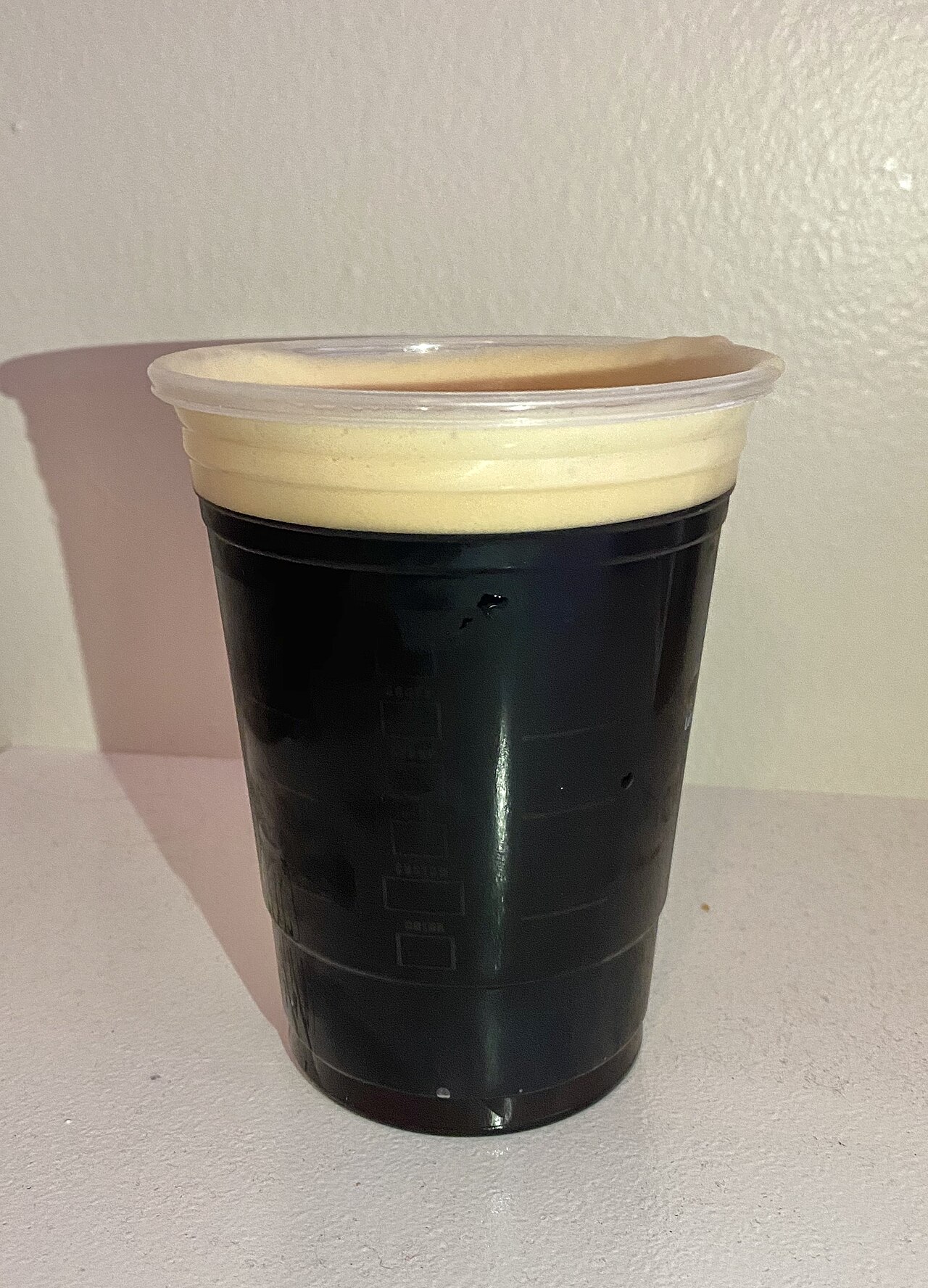
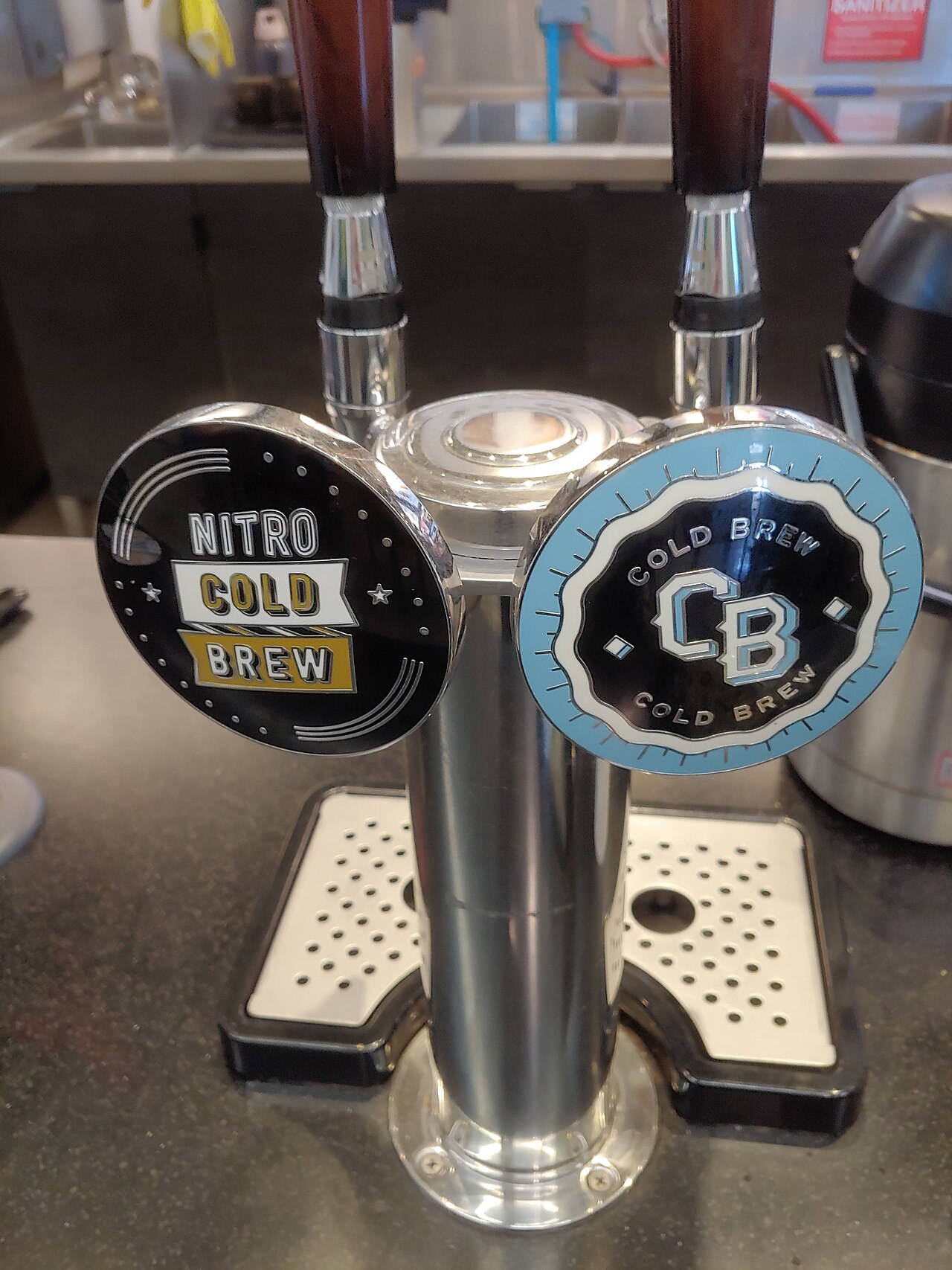
The first photograph is explicitly identified by its creator as a nitro cold brew serving. Its dark liquid sits under a pale foam head. The second is an equipment photograph: two taps labelled Nitro Cold Brew and Cold Brew stand beside one another. No finished cup is shown in the equipment image. Together they illustrate a drink and the service distinction, rather than two alleged views of the same serving.
A tap label is useful information but it is not a full ingredient declaration for every customized order. Likewise, a pale head does not prove milk was added. Ask about the recipe and additions. These historical photographs document real coffee and equipment; they are not evidence that a particular branch currently sells a product or has that exact tap installation.
Choose plain coffee or a finished flavoured product
Read the complete product name and ingredient list. A plain nitro coffee can be a different purchase from a nitro drink already combined with oat milk, cream, sugar or flavourings. Do not compare them as though nitrogen were the only difference. If you want to experience the base coffee’s texture, begin with a plainly described version and add other ingredients only if desired.
At a café, ask whether the drink includes a separate topping or syrup by default. A request for no extra syrup does not remove an ingredient incorporated into a prepared base. For a packaged drink, distinguish one can’s serving size from a larger bottle meant for more than one portion. Keep the container available until your ingredient questions are answered.
Follow the particular can instructions
RISE explains that its nitro coffee cans contain a nitrogen activation widget, released when the can opens, and says there is no need to shake its cans. That is a specific product instruction worth following rather than borrowing a vigorous-shake ritual from another beverage. A widget is not a loose ingredient to extract and inspect before drinking.
Read the actual package for chilling, opening and pouring directions. Prepare a clean glass large enough for both liquid and foam before opening. Open on a stable surface and pour according to that product’s method, watching the rising head. Do not generalize one maker’s shelf-stability statement to all cold brew, all cans or homemade coffee. Storage requirements belong to the product.
References: 2
Serve promptly and observe the changing head
If the visual cascade interests you, have the glass ready and look at the freshly poured drink before adding milk or stirring. Stumptown describes a nitro version made from its cold-extracted coffee and packaged to produce the creamy texture and cascading pour. That producer account explains a finishing process; it does not promise an identical foam height in every household glass.
Take a first sip soon after service and decide whether you like the texture and coffee balance. A head that changes as the glass stands is not a reason to keep shaking or transferring the drink between vessels. Additions are a preference, but they can obscure the original appearance you wanted to observe. Taste the plain serving first if comparison is the goal.
References: 3
Keep a comparison fair enough to be useful
If a café offers ordinary and nitro cold brew from the same base, ask for small comparable servings when available. Compare them at similar temperatures and without different syrups or cream toppings. That gives the texture difference a chance to be the feature you notice. The adjacent labelled taps in the equipment photograph make the two service options easy to recognize.
If the two products use different coffee or added milk, acknowledge those differences instead of attributing everything you prefer to nitrogen. A retail can and a café draft can also differ in portion, ingredients and serving conditions. Describe what you tasted without claiming a controlled test. Your preference can be useful without becoming a universal ranking.
Use approved equipment rather than improvising pressure
A home nitro dispenser is a separate equipment project, not the same as opening a ready-to-drink can. Use only a system designed for the beverage and follow the manufacturer’s specified gas, filling, pressure and cleaning instructions. This guide provides no improvised charging recipe and does not treat an ordinary whipped-cream dispenser as automatically equivalent.
For someone exploring the style, a clearly labelled packaged serving or a café pour is the simpler way to learn the intended result before considering equipment. If you already own a suitable system and the result disappoints, consult its troubleshooting guidance. Adding an unspecified charger or changing pressure because a picture shows a thicker head is not an informed adjustment.
Ask useful questions before ordering
Ask whether the nitro option is plain cold brew or a prepared flavoured drink, whether it has added milk or topping, and how the café serves it. If you want to compare texture, request the simplest available version. If it is unavailable, ordinary cold brew is another choice, but staff should identify the substitution instead of calling the two services identical.
For caffeine or dietary information, use the actual product and portion details. Neither a stout-like appearance nor a creamy texture establishes alcohol, dairy, sweetness or a caffeine amount. The named ingredients and producer information answer those questions. Choose the version that fits the coffee experience you want rather than treating nitro as an automatic improvement on every cold drink.
Compare service before comparing different recipes
Illustrative café order: Mei sees ordinary and nitro cold brew listed. She asks whether both use the same base and requests small plain servings if available. She leaves the vanilla cream topping off both, then compares the initial texture and coffee flavour. If the bases differ, she records that limitation in her own impression rather than presenting a preference as proof of nitrogen’s effect alone.
Questions
Does the pale foam mean cream was added?
Not by itself. The nitrogen treatment can produce a pale head, while some named drinks also contain milk or toppings. Check the specific ingredients.
Should I shake a nitro can?
Follow that can’s instructions. RISE says shaking is unnecessary for its widget-equipped coffee cans; that statement should not be silently transferred to every manufacturer.
Is the tap photograph another finished drink?
No. It is an equipment photograph showing labelled nitro and ordinary cold-brew service options, included to explain the distinction.
Sources and photography
Photographs are credited beside each image. Their recorded capture dates describe the images; check the current visitor or product information linked above when planning.