Café con hielo: sweeten the coffee first and pour with room for the ice
Café con hielo begins with brewed hot coffee and ice. Sometimes those components arrive together; sometimes the coffee cup and ice glass are separate so you finish the drink yourself. Learn a controlled transfer, understand what melting ice contributes and distinguish a short iced coffee from a deliberately lengthened version.
Recognize the two service stages
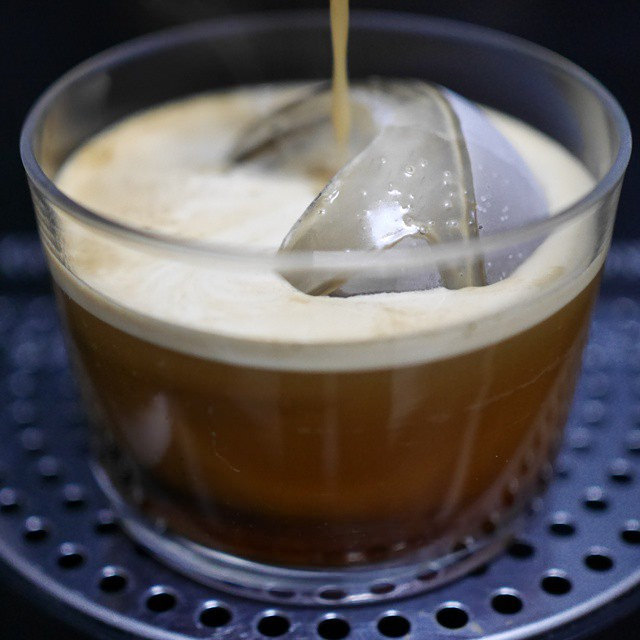
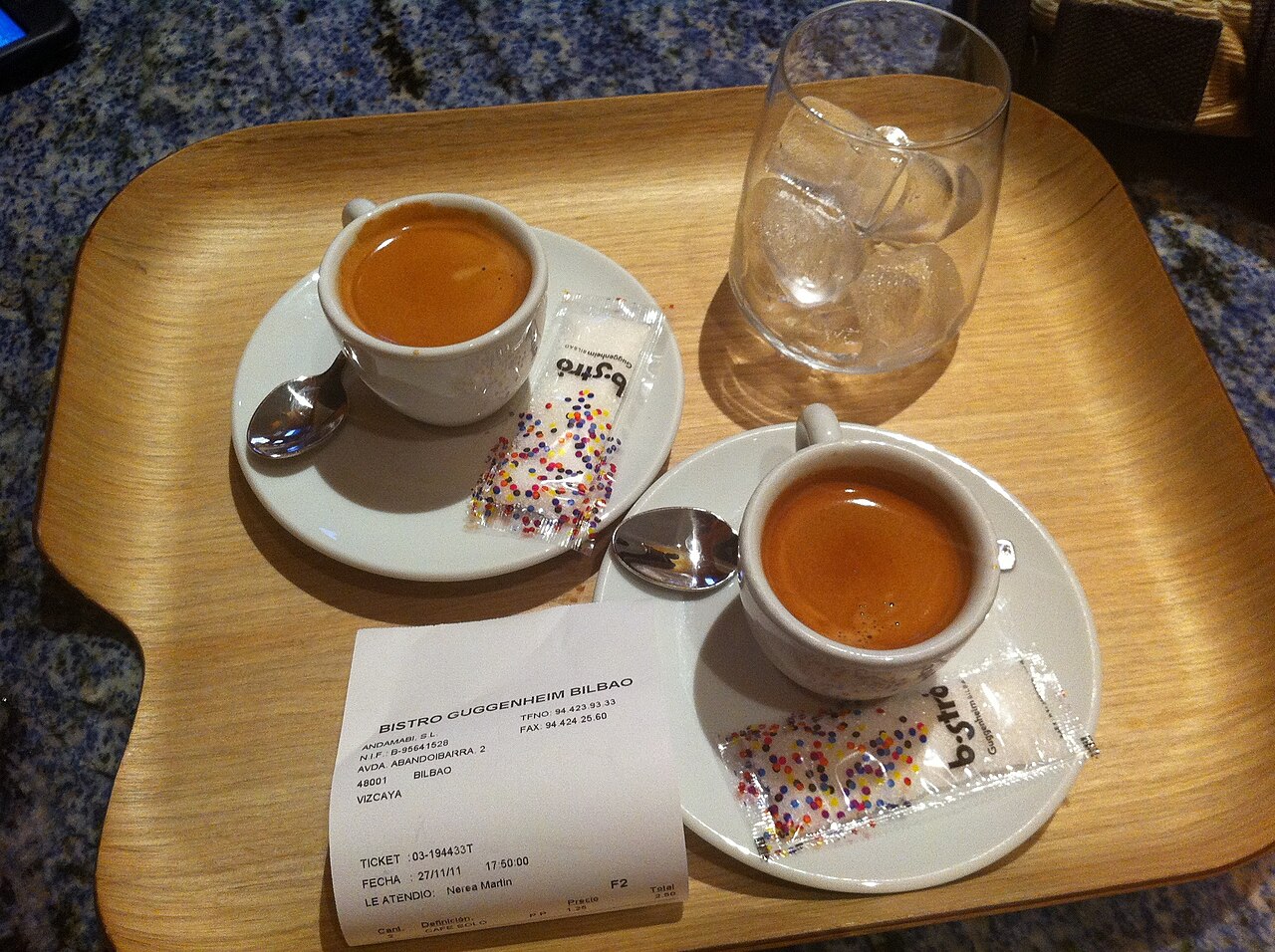
The Bilbao photograph shows two black coffees and a separate ice glass on a tray. Its creator explicitly identifies that service. The Madrid photograph shows coffee meeting ice in a glass. These are useful views of the preparation before and during transfer, not evidence that every café uses the same cup, coffee quantity or number of cubes.
Nespresso’s Spanish iced-coffee guide describes hot-brewed coffee combined with ice, distinguishing this from cold brewing. The practical question is what happens after brewing: whether you sweeten the coffee, how much ice you use and whether water is also added. A dark iced glass does not answer those questions by itself.
References: 1
Choose the coffee portion before the glass
Prepare a short coffee you already know how to make with your equipment, following its normal instructions. Do not prolong extraction solely because the final ice glass looks large. The available space is for coffee, ice and safe handling; it does not require the brewing machine to fill the whole vessel with coffee.
If following a producer recipe, use its stated coffee and ice amounts together. Nespresso’s Canadian on-ice example uses40ml coffee,90g ice and an additional90ml cold water. That last ingredient makes it a deliberately longer drink. It should not be silently treated as the same portion as a short coffee transferred onto cubes without extra water.
References: 2
Dissolve any sugar while the coffee is hot
If you want granulated sugar, stir your chosen amount into the coffee cup before transfer. Nespresso’s Spanish guide gives this sequence as an option. It keeps the sweetening stage accessible before cubes fill the serving glass. Use a modest measured amount for a first preparation and avoid assuming a sugar packet is compulsory simply because it arrives on the saucer.
Check the bottom of the cup as you stir, then put the spoon on the saucer. If you prefer unsweetened coffee, skip that action. A prepared syrup is another ingredient with its own concentration and flavour; it need not match the same spoonful of dry sugar. Decide deliberately rather than adding both by habit.
References: 1
Set the ice glass securely before pouring
Use a stable glass appropriate for the temperature change involved and follow its care instructions. Do not assume any thin decorative glass is suitable for hot coffee over ice. Put the glass down on the table or counter and check the available room. Large cubes displace liquid even though the gaps between them make the glass appear partly empty.
Use clean ice and leave headroom for the incoming coffee. If the glass already contains a pool of melted water, remember that this is part of the final dilution. Start with a sensible serving rather than trying to force a full hot cup into a small glass. Keep the cup, glass and spoon clear of the table edge.
Transfer close to the rim and watch the level
Lift the coffee cup securely and pour slowly into the ice glass, keeping the pouring distance manageable. Stop if the glass approaches full. There is no benefit in a high dramatic stream that splashes coffee or knocks cubes against the rim. Use the cup’s intended grip and handle the contents as hot even though the receiving vessel holds ice.
Once transferred, stir gently if needed to make the drink even. Taste a small sip after it has cooled suitably. Ice is actively changing the preparation, so the first sip and a much later one can have different concentration. Choose a serving you expect to enjoy promptly rather than letting a short coffee wait over melting cubes while another course arrives.
Adjust dilution with an actual decision
If the drink is too concentrated for your preference, a measured small addition of cold water creates a longer version. If it becomes weak quickly, review the initial coffee portion, wet ice and the time spent standing. Adding more sugar does not remove the extra water. Nor does another cube restore coffee concentration after the first cubes have melted.
On the next serving, keep the coffee preparation comparable and change one relevant part of service. For example, omit unplanned water from the ice glass, or select a smaller portion you will drink sooner. A change in roast, sugar, coffee volume and ice all at once makes it hard to know which adjustment helped.
Order the components you want to receive
Ask whether the café serves coffee and ice separately or assembles the drink behind the counter. Specify whether you want black coffee, milk, sugar or a longer water-added version. Staff can explain their own service; do not insist that an unfamiliar arrangement is wrong because another city used a different glass.
If milk or flavouring is included, identify it as an addition rather than assuming all iced coffee is the same recipe. A lemon slice creates another variation. At home, offer any optional additions separately when practical and tell guests whether the coffee has already been sweetened. That makes the last preparation step understandable instead of leaving someone to pour and guess.
A short coffee needs a planned transfer
Illustrative café service: Rosa receives a small black coffee, sugar and a separate ice glass. She sweetens the hot coffee, stirs it, checks the space around the ice and pours slowly with the glass resting on the table. She does not add cold water automatically because she wants the short version. A later order can request a longer drink explicitly.
Questions
Is this cold brew?
The preparation here uses hot-brewed coffee cooled with ice. Cold brew describes a different extraction process.
Must I empty the coffee cup into the ice glass at once?
Pour only what fits safely and comfortably. Check capacity before transfer rather than assuming every cup-and-glass pairing holds the same volume.
Why does the drink get weaker?
Melting ice contributes water. Initial coffee quantity, wet ice, any extra water and standing time affect the final mixture.
Sources and photography
Photographs are credited beside each image. Their recorded capture dates describe the images; check the current visitor or product information linked above when planning.