Turkish coffee in a cezve: measure the cup, watch the foam and leave the grounds
Turkish coffee combines very finely ground coffee and water in a small long-handled pot, with sugar added during preparation if wanted. The finished drink is poured without a filter, so grounds remain part of the cup. Learn a small-batch workflow that respects the pot’s capacity and lets you enjoy the liquid without chasing the sediment at the bottom.
Understand the method rather than a bean label
Türkiye’s culture ministry describes finely powdered coffee combined with cold water and optional sugar, then brewed slowly in a cezve until surface foam develops. This is a preparation method with particular tools and service. A bag called Turkish coffee should therefore be read for its intended grind and preparation, not treated as evidence that the beans necessarily grew in Türkiye.
For a beginner, a clearly labelled coffee ground for this method removes one difficult variable. If grinding your own, confirm that your grinder is designed to reach the required fine powder and use its directions. Ordinary filter grounds are not a direct substitute. Do not force a grinder beyond its specifications simply because a recipe mentions a finer grind.
References: 1
Use the serving cup as a practical water measure
Mehmet Efendi’s cezve guide measures drinking water with the coffee cup and lists six grams of coffee per cup. That is a useful producer starting method, though actual cup capacities differ. Measure your cup’s water volume once if you want a repeatable preparation, and leave room for the finished drink rather than filling the serving cup to a precarious brim.
Use coffee mass to avoid ambiguous spoon sizes: the producer’s English and Turkish pages render the spoon count differently while both specify six grams. This guide relies on the stated mass. Do not assume a large household mug is one traditional coffee cup and multiply the coffee without considering the capacity of the cezve you will heat.
References: 2
Match the pot to the batch and heat source
Choose a cezve made for food preparation and compatible with your heat source. Read its use and care directions, especially for lined metal interiors and handles that may heat. An ornamental pot is not automatically cookware. Place it stably and keep the handle away from a position where it can be knocked or reached across a burner.
Make a small batch within the pot’s working capacity. The coffee needs room to rise as it foams, so its physical brim is not a useful fill line. Have the cups ready before heating begins. This is a watched preparation; do not start it and leave to set the table elsewhere while the small pot sits over heat.
Add sugar at the preparation stage
Combine the measured water, coffee and any chosen sugar in the cezve. Ask guests about sweetness before preparing a shared batch. If people want different amounts, separate small batches are clearer than assuming everyone will correct their cup at the table. A finished unfiltered coffee is less convenient for vigorous stirring than a large filtered mug.
Mix as directed by the chosen recipe so the initial ingredients are combined. Keep an explicit sugar measure if you want to repeat it; a vague spoonful can mean very different quantities. Begin without extra spices when learning the plain method, unless you deliberately chose a spiced recipe. That keeps a new flavour from obscuring whether you liked the coffee preparation itself.
Heat slowly and attend to the rising foam
Following the producer’s guide, heat slowly and watch for the coffee to foam. Its sequence transfers a little foam to each cup, then returns the remaining coffee briefly to heat before filling the cups gently. Use that coherent sequence rather than combining several recipes’ repeated-boiling instructions. The purpose is a controlled preparation, not an unattended rolling boil.
Keep your attention on the liquid level and remove the pot from heat before a rise becomes an overflow. Heating equipment and pot sizes differ, so a fixed minute count is not a substitute for observation. Handle the cezve securely with appropriate protection and pour on a stable surface. A long handle does not guarantee that every part of it remains cool.
References: 2
Pour without filtering and let the cup settle
Mehmet Efendi describes the finished drink as unfiltered, with grounds settling at the bottom. Pour gently into the prepared cups rather than adding a paper-filter stage that changes the method. Give the serving a moment to settle and cool enough for comfortable sipping. The dark material at the bottom is not an extra espresso shot waiting to be consumed.
Sip the liquid without tipping the cup until all sediment slides into your mouth. You do not need to drain it completely. If the texture seems unusually gritty throughout, review grind suitability, pouring and whether you disturbed the cup immediately before sipping. Adding more water into the remaining sludge is not the same as preparing a fresh, properly measured cup.
References: 3
Serve accompaniments without turning them into rules
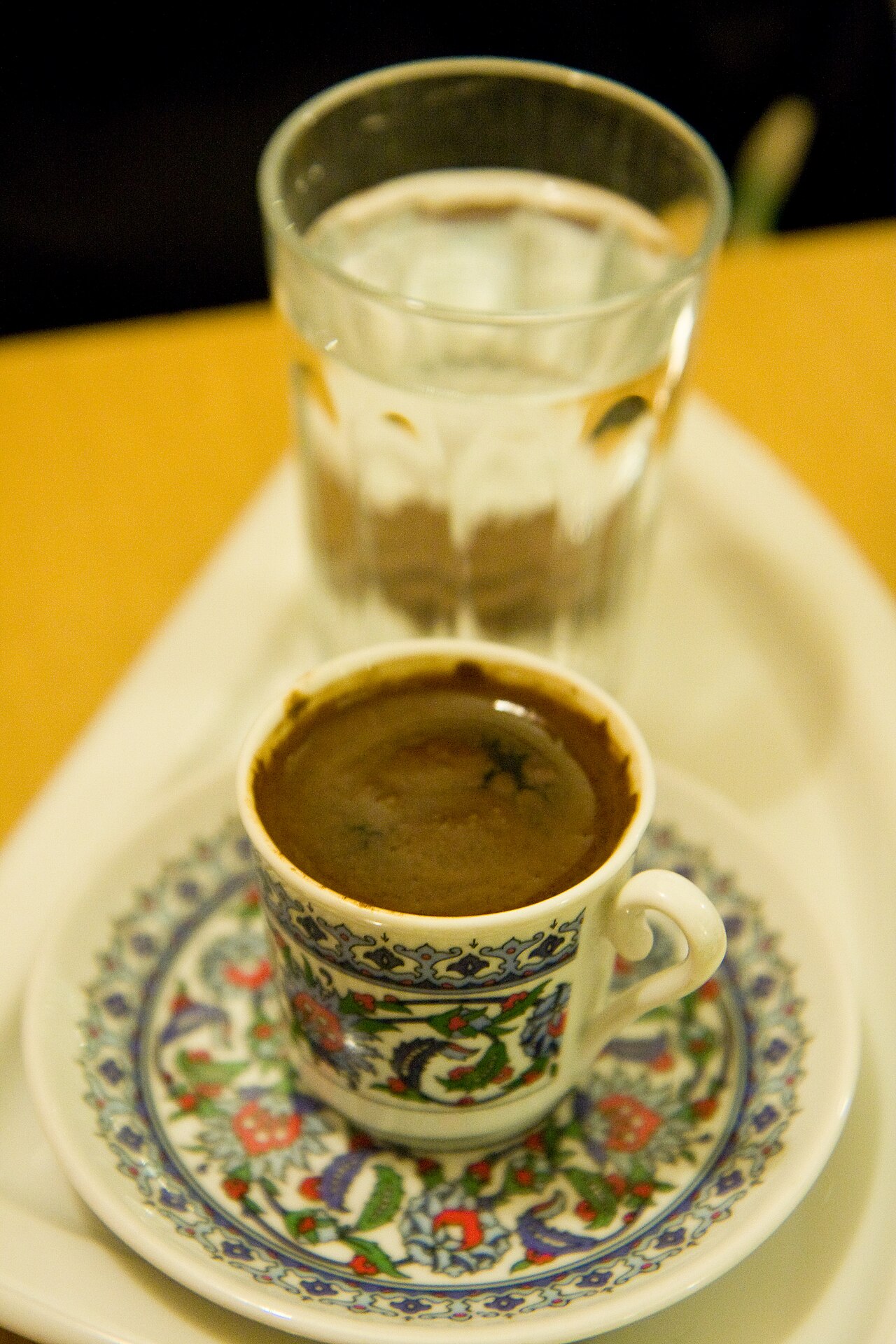
The culture ministry describes service with water and Turkish delight, and the producer likewise notes a glass of water. Those are useful service references. You can offer a small glass of drinking water beside the coffee and identify any sweet accompaniment separately. The coffee’s sugar level still needs to be decided before brewing, regardless of whether a sweet is available afterward.
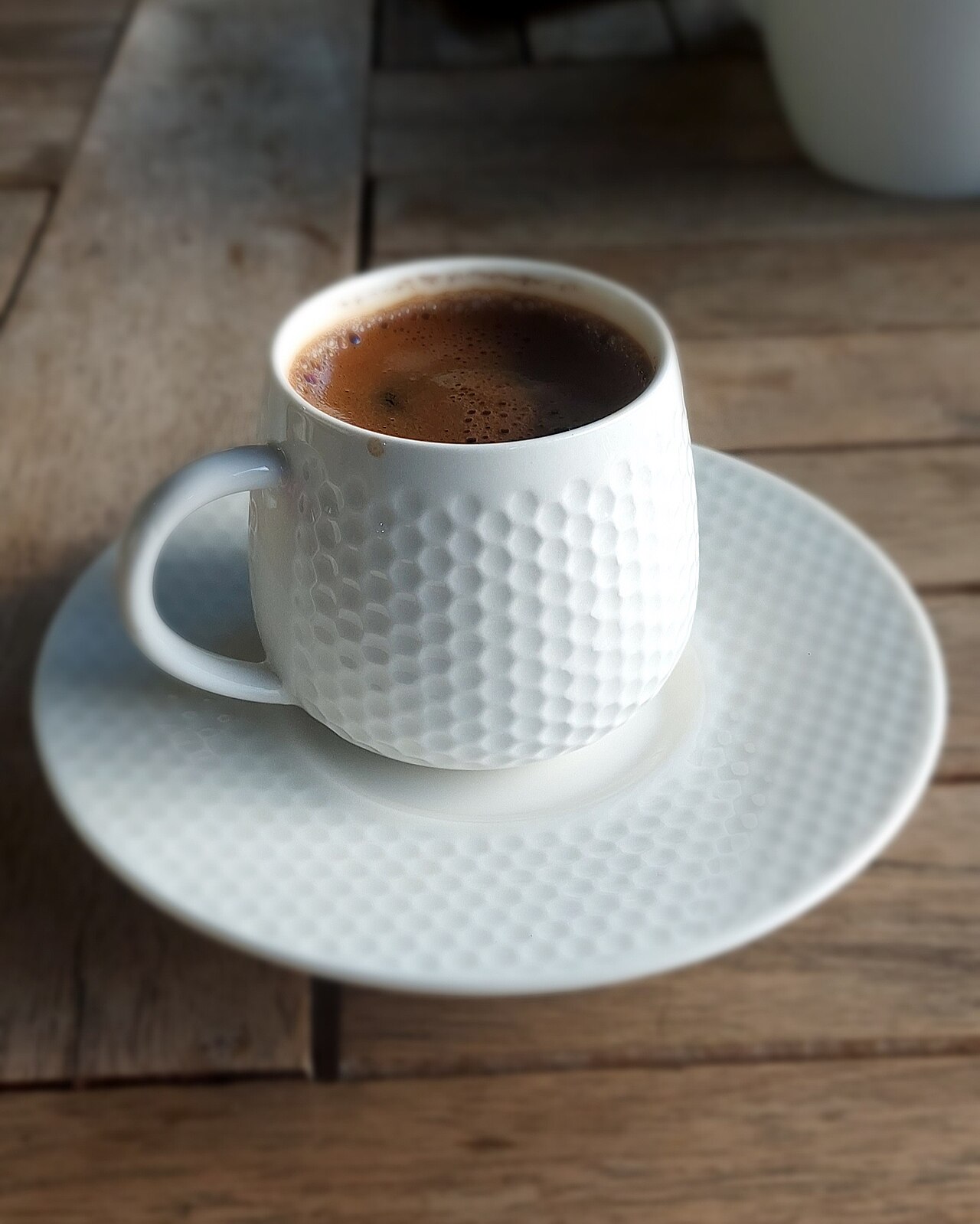
A plain cup remains a valid way to learn the method. Do not infer a compulsory dessert, spice or decoration from a photograph. Nor does an elaborate tray prove good brewing. Focus first on a manageable hot cup, the expected settled grounds and a coffee-to-water relationship you understand; decorative service can follow if you enjoy it.
Troubleshoot one brewing stage at a time
If coffee repeatedly rises too quickly for you to control, reconsider heat level and batch size before adding more coffee. If there is little foam, confirm the grind and preparation before declaring that the pot must be replaced. If the drink feels too concentrated, adjust a later measured recipe deliberately rather than topping off a nearly full cup with arbitrary water.
When ordering, specify whether you want sugar before the maker starts. Ask about spices or other additions when relevant. Avoid translating the small cup into a fixed caffeine value or health claim; beans, coffee quantity and preparation vary. This guide explains the physical method and serving choices without using a producer’s broad promotional comparisons as nutritional evidence.
One shared pot does not mean one shared sugar preference
Illustrative service: Deniz has two small cups and a cezve suitable for one serving. One guest wants no sugar and the other wants a sweetened coffee. Deniz prepares them separately, measuring each cup’s water and the coffee mass rather than crowding both into the pot. The choice organizes service around the actual equipment and guests, not around a ceremonial tray photograph.
Questions
Should I filter Turkish coffee?
The cited method serves it unfiltered, with grounds settling in the cup. Filtering creates a different preparation.
Must I drink all the sediment?
No. Sip the liquid and leave the settled grounds instead of tipping the cup until they pour into your mouth.
Does one cup always mean the same water volume?
No. Serving cups vary. Know your cup and pot capacity, and use a repeatable measure rather than substituting a large mug without recalculating the batch.
Sources and photography
- Türkiye Culture Ministry: Turkish Coffee Culture and Tradition
- Mehmet Efendi: With Cezve brew guide
- Mehmet Efendi: Turkish Coffee Characteristics
Photographs are credited beside each image. Their recorded capture dates describe the images; check the current visitor or product information linked above when planning.